

All News
Advertisement

The Column
A study published in PLoS ONE has provided the most comprehensive protein profile of cerebrospinal fluid to date, using liquid chromatography to identify 2630 proteins, nearly three times the number previously identified.
Advertisement

Thermo Fisher Scientific has developed a new method which it claims effectively eliminates invisible high boiling matrices in the analysis of pesticides in food.
The Column
LGC is to extend its hair drug analysis services in Europe, following an agreement to market a hair test from drug testing company, Psychemedics.
A report on the global gas chromatography systems market has predicted that it will be worth $1.2 billion by 2015.
The Column
The 15th Desty Memorial Lecture for Innovation In Separation Science is set to take place on 6 October at the Royal Institution in London, UK.
Advertisement
Crawford Scientific are offering what they describe as a ?unique new method development service using HPLC columns at the cutting edge of current technology? to customers within the UK.

The Column
Thermo Fisher Scientific has announced that its global Food Safety Response Centre in Dreieich, Germany, has developed two new analytical screening methods in response to the oil spill in the Gulf of Mexico.
Waters showcased the breadth and depth of applications for liquid chromatography and mass spectrometry at last month?s American Association of Clinical Chemistry annual meeting and Clinical Lab Expo.

E-Separation Solutions
Joining us for a discussion on software are Tony Owen, Agilent Technologies; Shaun Quinn, Dionex; David Chiang, Sage-N Research; and Edward C. Long, Thermo Fisher Scientific.
Advertisement
Thermo Fisher Scientific has announced it will be outfitting a new research centre in Victoria, Australia.
E-Separation Solutions
What is the best way to minimize GC column bleed? What factors increase column bleed?
The Column
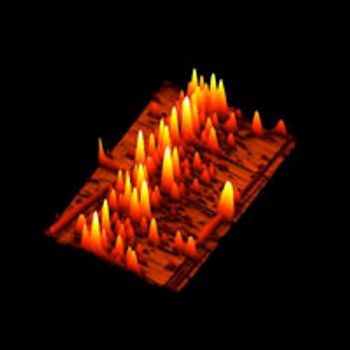
The GC×GC-7 symposium ran concurrently with this year?s ISCC in Riva del Garda, Italy. Speaking with The Column, Philip Marriott of the Australian Centre for Research on Separation Science, RMIT, Melbourne, Australia, said it ?offered the most comprehensive and thorough GCxGC programme yet assembled.?
AB SCIEX has announced that it will be working with scientists at the ETH Zurich Institute of Molecular Systems Biology as part of a Swiss biology programme to accelerate analysis and improve results for metabolomics.
The Column
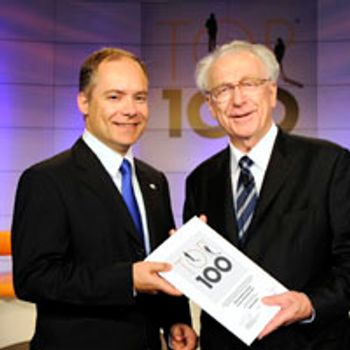
Knauer has been awarded second place in a list of the Top 100 Most Innovative Firms in Germany and placed first in the Climate of Innovation category.
Reductions in the UK?s science budget will have a paralysing effect on the country?s economy and job?s market according to the Royal Society of Chemistry (RSC).

LCGC North America
For some time now, readers have probably noticed the green "Chromacademy" logo at the end of their favorite columns and research articles here in the print issue of LCGC North America.
LCGC North America
Click the title above to open the LCGC North America August 2010 regular issue, Vol 28 No 8, in an interactive PDF format.
Oxidative metabolism of acetaminophen using ROXY EC system
Q&A
The Column
Agilent Technologies and the Agilent Foundation have announced that Professor Pauline Rudd has received an Agilent Thought Leader Award in support of her emerging glycomics research.
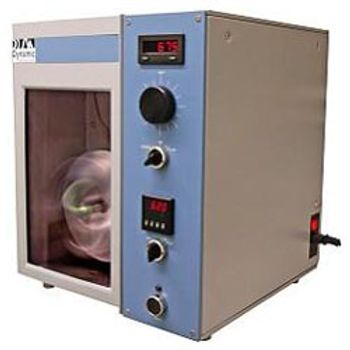
Dorton Analytical has been appointed the UK agency rights to support and supply the Dynamic Extraction range of high performance countercurrent chromatography (HPCCC) instrumentation.

The Column
This summer the National Gallery in London will host an exhibition demonstrating some of the ways that science has been able to shed new light on the history behind some of the Gallery's priceless works of art.
Novasep and instrAction have entered into an alliance that will offer customers in the pharmaceutical industry a combination of instrAction?s proprietary API-selective stationary phases and Novasep?s purification capabilities and high performance chromatography technologies.
Take advantage of these limited time offers on our LC and GC columns.

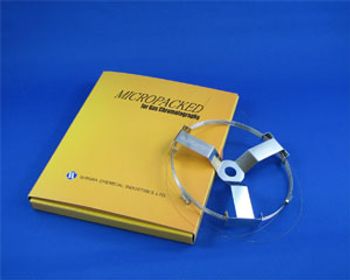
Shinwa Chemical Industries? micropacked GC columns are designed to provide rapid analyses of mixtures of permanent and light hydrocarbon gases.
E-Separation Solutions
Utilizing the ultra-high efficiency provided by core-shell technology columns, thirteen pain management opioids were resolved in 1.5 minutes with one second wide peaks at base on a Kinetex? C18 2.6 ?m 50 x 2.1 mm column.
The European Commission has cleared the acquisition of Millipore, US-based life science group, by German pharmaceutical and chemical company Merck.
Advertisement
Advertisement