

LCGC North America
Compressed gases have become an integral part of the laboratory. For many laboratory scientists, gases like hydrogen and nitrogen are used on a daily basis and are often taken for granted.
LCGC North America
Compressed gases have become an integral part of the laboratory. For many laboratory scientists, gases like hydrogen and nitrogen are used on a daily basis and are often taken for granted.

E-Separation Solutions
Compressed gases have become an integral part of the laboratory. For many laboratory scientists, gases like hydrogen and nitrogen are used on a daily basis and are often taken for granted. The expense, concerns of safety, and unexpected downtimes has motivated users alter their approach and institute laboratory gas generators. Instead of using cylindered gases to supply the carrier or fuel gas supply, increasing number of laboratories have become accustomed to using a laboratory gas generators, which can supply gasses for analytical instruments such as GC, LC-MS, NMR, Purge, and others.

E-Separation Solutions
Spray drying is the most widely used industrial process involving particle formation and drying. It is highly suited for the continuous production of dry solids in either powder, granulate or agglomerate form from liquid feedstocks as solutions, emulsions and pumpable suspensions. The technique is applied in almost every industrial sector, but has found the most utility in the food, chemicals and pharmaceuticals industries. In fact, these industries must comply with quality standards regarding particle size distribution, residual moisture content, bulk density and particle shape.

LCGC North America
Mass spectrometry (MS) is one of the most versatile and powerful instrument techniques available today. The market for MS runs the gamut of applications from pharmaceutical research and discovery labs, to military armament, to semiconductor processing, to environmental testing.

E-Separation Solutions
Mass spectrometry is one of the most versatile and powerful instrument techniques available today. The market for mass spectrometry runs the gamut of applications from pharmaceutical research and discovery labs, to military armament, to semiconductor processing, to environmental testing. The list seems to go on almost without end. New mass spectrometer techniques, including various tandem MS techniques, and applications continue to be developed and are being embraced by the growing fraternity of MS users.

LCGC North America
The techniques involved in successfully separating and quantifying amino acids vary from instrument to instrument. However, the processes for amino acid analysis are similar, involving hydrolysis, labeling, separation, and detection followed by data analysis.

E-Separation Solutions
The techniques involved in successfully separating and quantifying the amino acids vary from instrument to instrument. However, the processes for amino acid analysis are similar, involving hydrolysis, labeling, separation, and detection followed by data analysis.

LCGC North America
During the last several years, the GC market has experienced strong growth in part because of new product introductions, growth in the petroleum sector, and increased opportunities in various geographies. To shed light on and determine the many realities and trends of the current GC instruments market, Strategic Directions International conducted a global survey of gas chromatography (GC and GC-MS) users. The survey was designed for individuals who are currently using a wide array of GC instruments and consumables, including aftermarket software, components, and accessories. The data were collected over the phone and by an internet-based survey. When necessary, the internet survey was followed up with direct telephone interviews of the appropriate respondents to further clarify answers.

E-Separation Solutions
During the last several years, the GC market has experienced strong growth in part because of new product introductions, growth in the petroleum sector and increased opportunities in various geographies.

LCGC North America
Solid-phase extraction (SPE) has been available comercially for over twenty years and is still finding new applications. Growth of this technique seems to be largely a function the vendors' capability to provide specific application support, especially in clinical sciences, pharmaceuticals, toxicology, pesticides, and residues analysis.

LCGC North America
Thin layer chromatography (TLC) is a planar chromatographic technique introduced in the 1950s as a fast, easy, and inexpensive method for qualitative analysis. Just as with column chromatography, the chemistry and size of the particles (as well as the thickness of the layer) affects the speed and nature of the separations that are possible.
LCGC North America
Many analytical instruments traditionally used for research and development purposes are making a significant move into the clinical diagnostic market. One such technique is flow cytometry, a method used to examine the physical and chemical properties of cells.
E-Separation Solutions
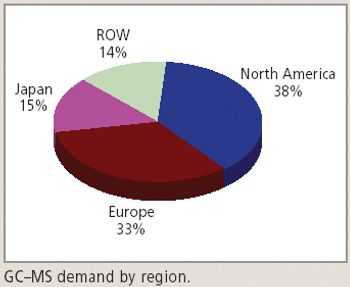
Gas chromatography–mass spectrometry (GC–MS) is the most widespread tandem technique in the analytical instrumentation industry. In fact, these systems account for the largest installed base of mass spectrometry instruments.
LCGC North America
Gas chromatography–mass spectrometry (GC–MS) is the most widespread tandem technique in the analytical instrumentation industry. In fact, these systems account for the largest installed base of mass spectrometry instruments.

E-Separation Solutions
This month's Market Profile looks at single-cell PCR, an application of PCR technology, which deals with the nucleic acid in single cells rather than in a tissue sample or a pool of homogenous cells.
LCGC North America
Single-cell PCR is an application of PCR technology, which deals with the nucleic acid in single cells rather than in a tissue sample or a pool of homogenous cells. While single-cell amplification has been recognized almost as long as the PCR technology itself, it was not considered a very efficient technique due to uncontrollable circumstances such as the lack of available primers and efficient cell-lysing techniques, which only allowed a small quantity of cell DNA to be amplified.
LCGC North America
Ion chromatography (IC) is well suited for the analysis of a variety of inorganic and organic anions and cations. There is an additional dimension to an experiment using the technique as a result of the need to deal with changes in the ionic strength of the solution as the analyte materials are exchanged.
E-Separation Solutions
Ion chromatography (IC) is well suited for the analysis of a variety of inorganic and organic anions and cations.

LCGC North America
The volatile extraction market consists of three techniques: purge and trap, headspace, and thermal desorption equipment. These systems are often employed as a sampling method for gas chromatography (GC) instrumentation but are also used with IR detectors, electrochemical sensors of electronic noses, and mass spectrometers.

LCGC North America
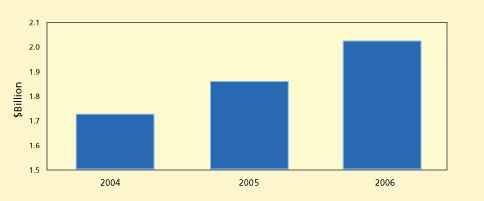
lthough liquid chromatography (LC) is most commonly associated with analytical techniques that are found inside the laboratory, LC also has been used in industrial applications for separation of a wide range of products for decades. The technique recently has been applied to requirements in the pharmaceutical and biotechnology industries, both inside the laboratory and in industrial settings. With global sales of over $1.7 billion, the market for preparative LC has encountered a stellar growth over the past few years.
E-Separation Solutions
Although liquid chromatography (LC) is most commonly associated with analytical techniques that are found inside the laboratory, LC also has been used in industrial applications for separation of a wide range of products for decades.

LCGC North America
Chiral technology has become a very important aspect for scientists involved in the pharmaceutical, chemical, and agricultural industries. The chiral enantiomers can have vitally different pharmacological effects in biological systems. In fact, the U.S. Food and Drug Administration mandates that only therapeutically active isomers must be introduced to the prescription drug market.

LCGC North America
Today's laboratories are sophisticated, generate large amounts of data, and rely on electronic data collection and tracking via a laboratory information management system (LIMS).

LCGC Asia Pacific
The Indian Society of Analytical Scientists (ISAS) Delhi Chapter has announced that the National Symposium on Recent Advances in Analytical Sciences and Applications will be held at the Himachal Pradesh University (Summer Hills, Shimla, India) between 5–7 April 2007.