



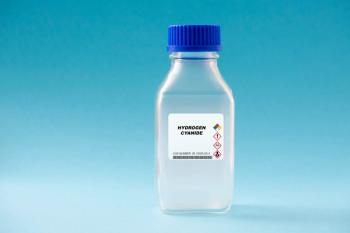
To quantify cyanide in different samples, a group of Brazilian scientists created a detection method based around headspace single-drop microextraction (HS-SDME).

A recent study conducted at the University of Jaén in Spain, unveils the presence of 21 phenolic pollutants, including bisphenols and alkylphenols, in milk and dairy products, with significant concentrations detected in items packaged in materials such as polystyrene terephthalate and multilayer packaging, emphasizing the importance of packaging choices in minimizing phenolic contamination.
To quantify cyanide in different samples, a group of Brazilian scientists created a detection method based around headspace single-drop microextraction (HS-SDME).

A novel LC–MS/MS method, with a dual ESI and APCI source using simple solvent extraction for sample preparation, was validated for analysis of 102 pesticides and 5 mycotoxins regulated by Colorado state in dried hemp.

A recent study conducted in Beijing, China, presented a novel method involving LC–MS/MS, UAE, and online SPE for characterizing environmental pollutants.

Gionfriddo’s lab focuses on developing advanced analytical separation tools for the analysis of complex biological and environmental samples using green extraction methodologies.

The Green Analytical Chemistry Workshop (1st TGAC) will be held 5–6 February 2024, at Novotel Paris-Charenton, Paris, France. Here's a glimpse at what attendees can look forward to.

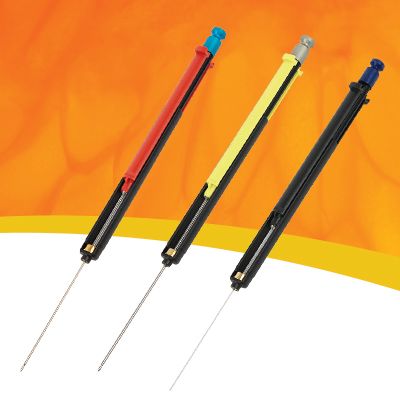
Headspace-solid-phase microextraction (HS-SPME) is widely used for the analysis of volatile compounds from different kinds of samples.

Vacuum-assisted headspace solid-phase microextraction (Vac-HS-SPME) is quickly becoming popular for enhancing the extraction of semi-volatile compounds.

FDA scientists have expanded the number of analytes in their analytical method for per- and polyfluoroalkyl substances (PFAS), partly in response to updated guidance out of the European Union (EU) on method parameters and limits of quantification (LOQs).

Results from our recent survey on sample preparation techniques uncover trends in the field over the last generation and their impact going forwards.

Okadaic acid (OA) is considered a marine toxin with distributed hydroxyl, polycyclic ether, and carboxyl groups, easily accumulated in shellfish and known to cause food poisoning in humans.

Researchers investigated the benefits of the efficient and environmentally friendly approach of direct solid-phase microextraction-mass spectrometry (SPME–MS) for rapid analysis.

This article demonstrates how sorptive extraction is a highly efficient technique for the VOC profiling of honey samples.

On Thursday, September 28, 2023, the Chromatographic Society (ChromSoc) will hold a meeting focused on gas chromatography in the Science and Industry Museum, in Manchester, UK.

Divinylbenzene (DVB) monoliths were nested within a melamine-formaldehyde sponge for solid-phase extraction (SPE) of bisphenols from aqueous solutions.
Studies published over the last five years have focused on fully or semi-automated approaches and their applications in extraction of both organic and inorganic pollutants, while modern robotic tools and 3D printing are starting to make impacts.

An examination of how greening analytical methods is directly connected to greening the sample preparation step

ExTech is the largest conference dedicated to extraction technology, a field within separation chemistry that has seen remarkable growth over the past three decades.

An overview of different approaches for the qualitative and quantitative analysis of polysorbates.

Plant growth regulators (PGRs) have significant effects on plant physiological processes, but the complex matrices of plants, along with polarity and instability issues inherent with PGRs, complicate trace analysis of these compounds.

Bjorn Berendsen of Wageningen University & Research said at NACRW 2023 that among more than 6,000 suspected per- and polyfluoroalkyl substances (PFAS), detailed information is known about relatively few.

A water-resistant, highly adsorptive molecularly imprinted polymer was developed to address the issues of unstable adsorption performance and high organic solvent consumption in traditional materials.

A research team has developed a new method for the online measurement of tetraethyllead (TEL) in aqueous samples. The approach utilizes magnetism-enhanced in-tube solid phase microextraction (ME/IT-SPME) coupled with high performance liquid chromatography (HPLC) and diode array detection (DAD).

Quality control of raw hazelnuts is already a highly specific process, but has limitations including operator influence, duration, and lack of standardization. AI is now assisting in quality decision-making using GC×GC analysis.

A novel isotopologue was synthesized in a stable isotope dilution assay (SIDA) for quantification of γ-nonalactone for the first time in pinot noir wines from New Zealand.

Enhancements in chromatographic performance were reviewed as were experimental concerns, both pointing toward using specific solvents to influence more sustainable industrial development.