|Articles|December 1, 1999
- December 1999
- Volume 17
- Issue 12
- Pages: 1113–1115
A Guide to Purchasing Used Chromatography Equipment
Author(s)Mark Atlas
More researchers are discovering that buying used laboratory equipment can be an effective way to reduce costs. An excellent supply of high-quality, used chromatography equipment is available on the market as a result of mergers and consolidations in biotechnology companies and downsizing in the environmental industry.
Advertisement
Used and refurbished high performance liquid chromatography equipment can be a cost-effective alternative to new instrumentation, and today's market has an excellent supply of this equipment. This article provides a helpful guide to the process, factors to consider, and tips about equipment sources, including new Internet services.
Articles in this issue
almost 27 years ago
New Sample Preparation Approaches to Biological Matrices for LC–MSalmost 27 years ago
Starting Out Right, Part I – Selecting the Toolsalmost 27 years ago
Desk-Top Database Management Systemsalmost 27 years ago
Preparative Liquid Chromatography and the Manhattan ProjectAdvertisement
Related to this article

In this eighth part of " Conversations with Michael Dong," a series on fundamentals of HPLC in pharmaceutical analysis, LCGC International’s "Perspectives in HPLC" column editor discusses why ultraviolet detection dominates pharmaceutical analysis and quality control.

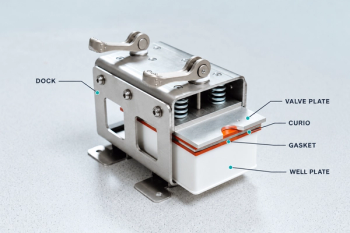
High-performance liquid chromatography–tandem mass spectrometry (HPLC-MS/MS) was used in a reverse triiodothyronine (rT3) test to separate canine hypothyroidism from illness.

Quantera Analytical’s Terry Bates discusses parallel headspace extraction for gas chromatography-mass spectrometry (GC–MS) and direct analysis in real time–mass spectrometry (DART–MS) analysis.

Amandaa Brewer warns a shortage of large-molecule chromatography experts, as practitioners retire, could leave the next generation without the fundamentals.

Christopher Chouinard of Clemson University discusses with LCGC International how derivatization reshapes steroid mass for sharper liquid chromatography-ion mobility-mass spectrometry (LC-IM-MS) separations.

Liquid chromatography–tandem mass spectrometry (LC–MS/MS) finds low glyphosate residues of the weedkiller glyphosate in coffee beans.
Advertisement
Advertisement