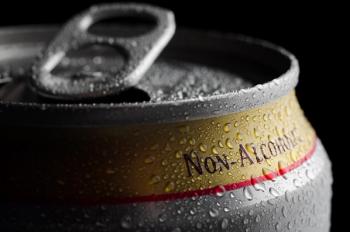
Gas chromatography (GC) tests show spoilage yeasts alter flavor and raise alcohol in NoLo beer.

Column Watch guest authors describe methods to predict optimal stationary phases, which enable more rapid and improved gas chromatography column development. By calculating optimal stationary-phase composition and physical parameters, column developers can construct columns that provide the exact separation requirements desired by analysis or current methods.
Click below to download the article:
about 26 years ago
Welcome to Web Analysisabout 26 years ago
Reversed-Phase LC in 100% Waterabout 26 years ago
GC Connections: Thermal Desorption Samplingabout 26 years ago
Coupling Static Headspace Sampling to High-Speed Gas Chromatography