The session The Future of Chromatography Is Here – Are You Ready? consists of three consecutive parts.
Part One (9:30–12:00): Towards Sustainable HPLC: Are Narrower Columns the Solution? opens with the EuChemS-DAC Tribute to Wolfgang Buchberger, presented by Martin Vogel. This prestigious award honors outstanding long-term contributions to the Division of Analytical Chemistry of the European Chemical Society. Subsequent lectures include Thorsten Teutenberg (IUTA, Duisburg, Germany) presenting From Filament to Chromatogram: Using Additive Manufacturing to Democratise Miniaturisation and Promote Sustainability in Analytical Laboratories; Caroline West (University of Orléans, France) discussing Supercritical Fluid Chromatography as a Sustainable Analytical Method; and Frédéric Lynen (Ghent University, Belgium) presenting Microfluidic Versus Conventional LC–HRMS for HIV Metabolomics: A Comparative Performance Assessment.
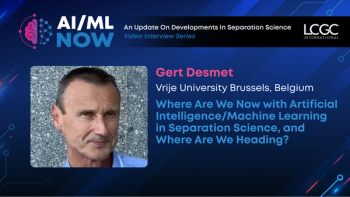
Part Two (12:30–14:30): GC & HPLC: The Cutting-Edge Advances You Need to Know – Part I follows the lunch break and poster exhibition and focuses on emerging separation science technologies. Gert Desmet (Vrije Universiteit Brussel, Belgium) will present Next-Gen HPLC: A Column Technology Deep Dive; Giorgia Purcaro (University of Liège, Belgium) will discuss GC-Based Hyphenated Techniques for Detailed Characterization of Complex Samples; Kevin Schug (University of Texas at Arlington, USA) will introduce Molecular Encoding as a Tool to Enable Data Science-Assisted Analytical Measurements; and Gauthier Eppe (University of Liège, Belgium) will present Good Resolutions for Bad Pollutants: Ion Mobility–HRMS to Resolve Complex Environmental Mixtures.
Part Three (15:00–17:00): Emerging Hyphenated and Multidimensional Techniques highlights the latest developments in multidimensional separations. Jean-François Focant (University of Liège, Belgium) will present GC×GC–TOFMS for Medical Volatolomics; Peter Tranchida (University of Messina, Italy) will discuss Cryogenic Band Compression as a Means to Simplify the Sample Preparation Step in 1D and Comprehensive 2D GC Food Analysis; Bob Pirok (University of Amsterdam, Netherlands) will address Significance of Radial Dispersion to Effective Modulation in Two-Dimensional Liquid Chromatography and Its Role in Machine-Learning-Based Automated Method Development; and Karine Faure (University of Lyon, France) will present LC×SFC Coupling: A Robust Tool to Aid Understanding of Renewable and Circular Industrial Processes.
Munich in spring offers a unique blend of scientific excellence, international atmosphere, proximity to the Alps, and renowned Bavarian hospitality. I cordially invite you to visit analytica and the accompanying conference and exhibition, and to embark on stimulating discussions on the future of chromatography with internationally renowned experts, and learn about the latest technological developments. Analytica provides an opportunity to learn about the latest technological solutions for analytical scientists and continues to drive the analytical science industry forward.
Further information is available at: https://analytica.de/