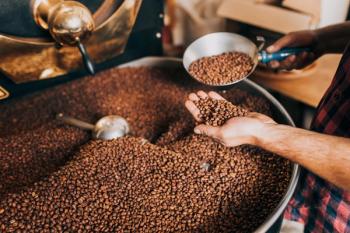
Liquid chromatography–tandem mass spectrometry (LC–MS/MS) finds low glyphosate residues of the weedkiller glyphosate in coffee beans.
LCGC International spoke to the HTC-19 Organizing Committee about what delegates can expect to at HTC-19, which will be held in Leuven, Belgium, from May 26–29, 2026.
Q. Does HTC-19 have an identity that is distinct from that of other chromatography conferences?
A: The HTC conference traditionally attracts a relatively large number of participants from industry, alongside a strong academic community. It is widely recognized for its strong scientific program, lively and in-depth discussions, and the warm Belgian hospitality that creates a welcoming and collegial atmosphere. This experience is further enriched by excellent Belgian food and a renowned beer culture, which provides the perfect informal setting for continuing scientific discussions beyond the lecture hall.
One of the great strengths of HTC-19 is the close collaboration with the Separation Science Group of the Royal Society of Chemistry (RSC). Through this partnership, the RSC is actively involved in organizing several dedicated scientific sessions on the power of hyphenation and the future of separation science, and contributes a strong line-up of excellent speakers from the UK. This collaboration further enriches the scientific program, broadens the international perspective of the meeting, and strengthens the exchange between the European and UK separation-science communities.
HTC also consciously moves beyond the traditional conference model in which programs are often shaped by a recurring set of invited speakers, leaving limited room for new voices and perspectives. Moreover, by integrating early-career researchers into the core program, HTC fosters a dynamic exchange between established experts and the next generation of scientists.
Q. Is there anything else new or different in the program of HTC-19?
A: One of the new elements of HTC-19 is the introduction of hands-on short courses on Tuesday, May 26, 2026, preceding the main conference. These courses are explicitly designed to be practical and interactive, to enable participants to gain direct experience in real workflows with experienced instructors. The goal is to deepen participants’ understanding of method development, instrumentation, data handling, and troubleshooting, ensuring they can immediately apply learned concepts in their work.
I would also like to highlight the dedicated session on “Green Sample Preparation and Sustainable Separations,” organized by Elia Psillakis on behalf of the EuChemS Division of Analytical Chemistry (DAC). This session offers a timely perspective on how analytical scientists can minimize waste generation and develop environmentally responsible workflows—an aspect becoming central to modern separation science.
Moreover, we will organize an interactive discussion session involving analytical laboratory managers, technical specialists, and HTC attendees. During this session, the current state of the art in hyphenated systems will be critically assessed, best practices will be shared, and existing limitations and practical challenges will be openly discussed. The session is explicitly forward-looking and aims to identify key requirements and priorities for shaping the analytical laboratory of the future.
Q. Can you tell us more about the plenary speakers?
A: In the late afternoon of May 26, the conference will open with a plenary session in the magnificent University Hall of KU Leuven. This opening session promises to be truly memorable, featuring two inspiring lectures that offer an out-of-the-box perspective on science, chemistry, and chromatography. Metin Tolan will present “Shaken, Not Stirred – James Bond In the Spotlight of Physics”, followed by “A Chemical Journey Through the Kitchen: Delicious Science,” presented by Peter Van Broeck.
On Wednesday, May 27, the scientific program officially kicks off with two plenary lectures. Caroline West will open with “Under Pressure: Bringing Supercritical Fluids to Multidimensional Analysis Systems”, followed by Leon Barron with “The Challenges of Scale for Meaningful Environmental Research”. The conference will conclude with two closing plenary lectures. Emma Schymanski will present “Open Science Cheminformatics Resources Supporting Hyphenated Non-Target Screening Efforts”, followed by Hans-Gerd Janssen with “Hyphenated Methods in Chromatography: Innovations Realised and Challenges Remaining.” These topics aim to cover the full chain of hyphenated techniques: from instrumental innovation and multidimensionality, through practical applicability, to data analysis, open science, and future challenges.
Q. What aspects of the conference will be of value to young scientists?
A: HTC-19 offers many opportunities for young scientists to actively present and discuss their work, both through oral presentations and poster-flash presentations. These short, focused pitches will give young scientists the opportunity to highlight the key message of their work in front of a broad audience, serving as a gateway to deeper one-on-one discussions during the poster sessions. Overall, the aim is to create a supportive yet scientifically rigorous environment, making HTC-19 not just a conference to attend, but a platform to grow as a scientist. Also note that several travel grants are available to support the participation of young scientists.
Q. Do you think people need to be convinced of the value of attending an in-person scientific meeting?
A: The value of an in-person scientific meeting goes far beyond the transmission of slides and data, and that is something that does not require much convincing for most researchers. HTC creates space for spontaneous discussion, critical questioning, and informal exchange between participants from academia and industry, including close interaction with instrument and column vendors. Combined with tastings of Belgian specialities, this sets the stage for a highly successful and memorable meeting.
Q. Putting together a large conference is a lot of work. How will you judge if it was a success?
A: For us, HTC-19 will be a success if the scientific discussions are lively and critical, and participants are inspired by new connections and ideas. We will also look at whether young researchers felt visible and encouraged, whether new collaborations were initiated, and whether industry participants experienced meaningful engagement.
Q. Anything else participants should be aware of?
A: In the late afternoon of Thursday, May 28, we will host HTC’s Got Talent, an informal session celebrating creativity and curiosity in chemistry. Participants are invited to test their knowledge through a chemistry quiz, while everyone is also encouraged to bring their daily research to life through short chemistry-tube presentations, that is, a three-minute animated video. In the evening, the conference dinner takes place at a historic venue nestled within the beautifully restored Grand Beguinage, a UNESCO World Heritage site.
Further information
Email: info@htc-19.com
Website: https://htc-19.com
7 months ago
The Future of Analytical Science7 months ago
The Overlooked Toolkit in Analytical Science7 months ago
The Structural Changes Needed for Inclusion7 months ago
See It, Be It: The Power of Representation7 months ago
Beyond LC Column Selection7 months ago
Lost in Translation: Academia Meets Industry