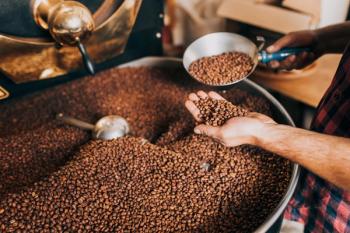
Liquid chromatography–tandem mass spectrometry (LC–MS/MS) finds low glyphosate residues of the weedkiller glyphosate in coffee beans.
HIC-MS, ADC characterization, career insights, and aroma and protein detection research highlight this week’s website offerings.
This week, the LCGC International website featured a three-part interview with Bingchuan Wei, a senior principal scientist at Genentech, covering how HIC-MS improves resolution and quantification of drug-to-antibody ratio species in antibody-drug conjugate development, the field's remaining analytical challenges, and how strong characterization strategies meet regulatory expectations. The website also presented two articles on the human dimensions of analytical science, addressing mentorship, academia-industry gaps, and the role of inclusive leadership and communication in shaping chromatography's future. On the research side, highlights include a new ruthenium-based tag that combines fluorescence and mass spectrometry imaging for better protein detection in tissue, a UHPLC–MS study associating higher maternal betaine levels with lower birthweight outcomes, and a GC-O-MS and Sensomics comparison showing that laboratory and pilot-scale pervaporation yield grape spirits with virtually identical aroma profiles.
This is the Best of the Week.
LCGC International Presents a Three-Part Interview with Bingchuan Wei of Genentech
Bingchuan Wei, senior principal scientist from Genentech Inc, is a scientific leader with nearly 15 years of experience in the analytical and CMC development of different modalities of therapeutics including small molecules, oligonucleotides, peptides, monoclonal antibodies, antibody-drug conjugates, and cell therapies. His research focuses on developing and leveraging advanced analytical technologies in drug development, understanding the structural-functional relationship of therapeutics, and fostering entrepreneurial spirit in the biopharmaceutical industry.
LCGC International spoke to Wei about explains how hydrophobic interaction chromatography-mass spectrometry (HIC-MS) integrates separation and mass detection to resolve and quantify individual drug-to-antibody ratio (DAR) species with greater precision than standalone HIC or MS alone. He also identifies the toughest unresolved analytical challenges in antibody-drug conjugate (ADC) development and highlights the emerging technologies he sees as most capable of closing those gaps. Finally, Wei discusses how robust ADC characterization strategies meet regulatory expectations and how stronger methodologies can accelerate candidate selection to clinical approval.1-3
A discussion on mentorship, industry gaps, and how confidence, exposure, and support shape careers in analytical science.4
Chromatography’s future depends on inclusive leadership, mentorship, communication, and human skills alongside technical expertise.5
LCGC International spoke to David Bishop of the University of Technology Sydney about a new ruthenium-based tyramide amplification tag that combines fluorescence imaging with mass spectrometry imaging to improve detection and quantification of low-abundance proteins in tissue samples.6
Using ultrahigh-performance liquid chromatography–mass spectrometry (UHPLC–MS) analysis, researchers quantified choline and betaine levels in maternal and cord blood and found that higher betaine exposure during pregnancy was associated with lower birthweight and reduced risk of excessive fetal growth.7
Gas chromatography–olfactometry–mass spectrometry (GC-O-MS) combined with a Sensomics approach showed that laboratory and pilot-scale pervaporation produce grape spirits with highly similar aroma profiles and no significant differences in key odor-active compounds or consumer preference.8
References
1. Wei, B.HIC-MS Method for DAR Species Differentiation. Chromatography Online website
2. Wei, B.Analytical Gaps in Complex ADC Design. Chromatography Online website
3. Wei, B.Aligning Characterization With Regulatory Expectations. Chromatography Online website
4. Jones, K.From the Bench to the Bigger Picture: Career Pathways, Academia–Industry Gaps, and the Future of Analytical Chemistry. Chromatography Online website.
5. Jones, K. Beyond Technical Excellence: Leadership, Inclusion, and the Human Skills Shaping Chromatography’s Future. Chromatography Online website.
6. Bishop, K.; Chasse, J. Multimodal Spectrometry Tag Enhances Protein Detection in Tissue Imaging. Chromatography Online website.
7. Chasse, J. UHPLC–MS Profiling of Maternal and Cord Blood Choline and Betaine in Relation to Birthweight Outcomes. Chromatography Online website.
8. Chasse, J. GC-O-MS and Sensomics-Based Comparison of Laboratory and Pilot-Scale Pervaporation in Cabernet Sauvignon Grape Spirit Production. Chromatography Online website.