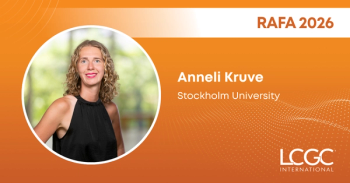
Anneli Kruve reports that toxicity predictions from MS2-derived molecular fingerprints outperform spectral-similarity methods in nontarget screening of food.
Bingchuan Wei of Genentech explains how HIC-MS integrates separation and mass detection to resolve and quantify individual DAR species with greater precision than standalone HIC or MS alone.
In this interview, Bingchuan Wei of Genentech discusses how advanced analytical strategies are helping address some of the most pressing challenges in antibody-drug conjugate (ADC) development.1,2
In this video clip, Wei answers the following question:
Across the conversation, he emphasizes the need for methods that can keep pace with increasingly complex molecular designs while still delivering reliable, decision-enabling data. He explains that modern analytical development is no longer limited to confirming basic product attributes; it now plays a central role in understanding molecular heterogeneity, identifying low-level impurities, supporting process development, and strengthening confidence in candidate selection. As ADCs continue to evolve in linker chemistry, payload design, conjugation strategy, and overall structural complexity, analytical scientists are being asked to generate deeper insight with greater speed and precision. Wei makes clear that this challenge is not simply about producing more data, but about producing the right kind of data—information that can meaningfully inform decisions across discovery, development, and eventual manufacturing. A recurring theme is the importance of combining separation science, mass spectrometry (MS), and other high-information techniques to create a richer and more practical picture of ADC quality and behavior. Rather than viewing these methods in isolation, he describes the value of integrated analytical approaches that can distinguish subtle molecular differences, quantify relevant species, and provide a more complete understanding of product composition. This is particularly important for ADCs, where distribution patterns, conjugation profiles, and low-level variants can directly influence safety, efficacy, manufacturability, and regulatory confidence. Wei also highlights the growing value of approaches that are faster, more informative, and easier to integrate into development workflows, particularly when timelines, cost pressures, and regulatory expectations are all intensifying. He points to a broader industry shift toward analytical platforms that do more than characterize; they must also support comparability assessments, accelerate troubleshooting, and help teams make critical development decisions earlier. In addition to technical innovation, he stresses the importance of collaboration across functions, noting that analytical scientists must work closely with teams in process development, formulation, pharmacology, and molecular design to ensure that methods answer the most relevant questions. Wei also reflects on the broader mindset needed for success in the field, including curiosity, openness to new modalities, and a willingness to take thoughtful risks in a regulated environment. He suggests that progress depends not only on scientific rigour, but also on the ability to connect technical detail with larger medical and business goals.
Bingchuan Wei is a senior principal scientist from Genentech Inc, a member of Roche Group. He is a scientific leader with nearly 15 years of experience in the analytical and CMC development of different modalities of therapeutics including small molecules, oligonucleotides, peptides, monoclonal antibodies, antibody-drug conjugates, and cell therapies. His research focuses on developing and leveraging advanced analytical technologies in drug development, understanding the structural-functional relationship of therapeutics, and fostering entrepreneurial spirit in the biopharmaceutical industry. He holds a Ph.D in analytical chemistry from Purdue University, a master of business administration from The Pennsylvania State University, and a B.S. in chemistry and mathematics from Peking University.
To hear more from Wei, please click the links below: