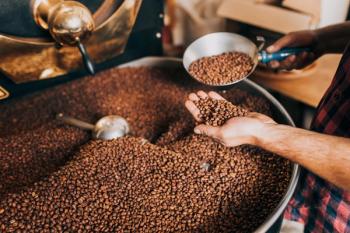
Liquid chromatography–tandem mass spectrometry (LC–MS/MS) finds low glyphosate residues of the weedkiller glyphosate in coffee beans.
This week’s Chromatography Online coverage highlights chromatography's expanding reach—from greener tetracycline and pesticide-residue methods to LC-MS/MS and GC-MS breakthroughs in detecting pregnancy loss markers, bladder cancer, tobacco exposure, and cardiac risk.
This week's Chromatography Online content spans a wide range of chromatography applications across health, food safety, and environmental science. A multinational team introduced a greener, miniaturized CPME-HPLC-DAD method for detecting four tetracyclines in urine, offering a simpler and cheaper alternative to LC-MS/MS, while our Associate Editorial Director Kate Jones also continued her conversation with Marinella Vitulli on untargeted HRMS screening for PFAS, bisphenols, and other emerging contaminants in food contact materials, including strategies for avoiding false positives in NIAS testing. On the clinical front, LC-MS/MS studies uncovered inflammatory lipid markers tied to recurrent pregnancy loss and linked urinary cotinine levels to tobacco exposure in Saudi women, while GC-MS combined with machine learning improved bladder cancer detection through urine testing. Elsewhere, new biosensors are being paired with chromatography for cannabinoid pain-therapy monitoring, GC/LC-MS methods examined how chlorine-radical treatments affect pesticide residues on strawberries, and HPLC-MS blood analysis identified linoleic acid and bile acids as potential markers of coronary artery disease risk.
This is the Best of the Week.
A multinational research team developed a green, miniaturized CPME-HPLC-DAD method to simultaneously extract and detect four tetracyclines in human urine, offering a simpler, cheaper alternative to LC-MS/MS with improved sensitivity. LCGC International spoke to Fedra Vasileiou, Victoria Samanidou, and Abuzar Kabir, three of the authors of the paper that resulted from this work.1
Untargeted HRMS Screening of Emerging Contaminants in Food Contact Materials: PFAS, Bisphenols, and NIAS
LCGC International presented the rest of our discussion with Marinella Vitulli—founder of Food Contact Center and Food Contact Services—about her work and her presentation at the recent ASMS conference titled, "Untargeted HRMS Screening of Emerging Contaminants in Food Contact Materials: PFAS, Bisphenols, and NIAS.” The talk detailed a suspect and non-target HRMS screening workflow built around proprietary spectral libraries for food contact material (FCM) safety assessment. 2,3
Liquid chromatography-tandem mass spectrometry (LC-MS/MS) reveals inflammatory lipid markers in recurrent pregnancy loss.4
Machine learning boosts gas chromatography-mass spectrometry (GC-MS) urine testing for bladder cancer detection.5
Liquid chromatography-tandem mass spectrometry (LC-MS/MS) analysis of urinary cotinine objectively assesses tobacco exposure in women.6
Chromatography meets new biosensors for cannabinoid pain-therapy tracking.7
Gas chromatography/liquid chromatography-mass spectrometry (GC/LC-MS) methods measure pesticide residue after chlorine-radical treatment.8
High-performance liquid chromatography-mass spectrometry (HPLC-MS) blood analysis links linoleic acid, bile acids to cardiac risk.9
References