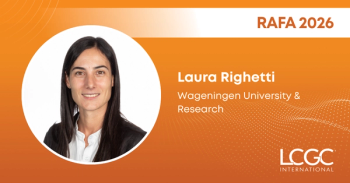
Laura Righetti explains why quantification, not instrumentation, still keeps mass spectrometry imaging (MSI) out of routine food safety testing.
This week, LCGC International published a variety of articles on hot topics in separation science. From our open call for the latest in chromatography technology to discussing the role preanalytical factors play in blood alcohol concentration (BAC) analysis, we remain dedicated to sharing the latest in chromatographic advancements. Below, we’ve highlighted some of the most popular articles that were published this week.
Caroline Hroncich
Are you developing the next breakthrough in chromatography? Whether you're launching high-performance liquid chromatography (HPLC) systems, advancing gas chromatography (GC) technologies, or building powerful chromatography data systems (CDS) and software—now is the time to share your innovation with the global scientific community. We’re inviting scientists, engineers, and product developers to submit their latest chromatography products that are redefining how separation science is applied across industries. Submitted products will be reviewed by our editorial team for potential inclusion in LCGC International’s 2025-2026 New Product Review article.
Aaron Acevedo
Forensic science is used for a variety of purposes from enforcing criminal law to protecting public health. It is now standard practice to use advanced forensic techniques, such as fingerprinting, DNA testing, and more, when assessing physical crime scenes. These techniques are improving how crimes are solved in the field. Maria Olds of the University of Texas at Arlington is one of these researchers. In the final section of our time with Olds, she discusses the consequences of not accounting for preanalytical factors in blood alcohol concentration (BAC) analysis. Additionally, Olds suggests what other forensic scientists should take away from her work and apply to their own research.
John Chasse
Glycosyl inositol phospho ceramides (GIPCs) are the most abundant sphingolipids in plants, forming a major structural component of the plasma membrane in both dicotyledonous and monocotyledonous species. Despite their ubiquity, the structural complexity and functional diversity of GIPCs have made them analytically challenging to study. These lipids play essential roles in membrane organization, signal transduction, plant development, immune responses, and adaptation to environmental stress. In this, the first of a two-part series, LCGC International spoke to Evelyn Rampler of the Department of Analytical Chemistry at the University of Vienna, and corresponding author of the paper that resulted from this research, which was published in Plant Journal, about the insights yielded regarding the role of glycosphingolipids in plant physiology and environmental resilience.
John Chasse
In recent years, there has been a considerable rise in interest regarding cocoa and its derivatives, propelled by its popularity in the food industry as a confectionery and nutritional supplement, in addition to its recognized health benefits. The trend has expanded scientific interest in the chemical and physicochemical characterization of these products. Researchers at the Central University of Venezuela (Caracas, Venezuela) developed a methodology for the analysis of cocoa bean extracts through the separation of molecules from the mixture using thin layer chromatography (TLC) and surface-enhanced Raman spectroscopy (SERS). This methodology, according to the researchers, lays the foundation for future quantitative applications in the evaluation of cocoa quality and origin.
Aaron Acevedo
Albendazole (ABZ/methyl-[(5-propylthio)-1H-benzimidazol-2-yl] carbamate) is a benzimidazole derivative that is used for a broad variety of anthelmintic activity, the effectiveness of compounds in expelling or killing parasitic worms. It is an approved medication for treating various parasitic worm infections, including neurocysticercosis, ascariasis, and human alveolar echinococcosis (AE). While useful in medical treatments, ABZ can have toxic side effects when used improperly. To mitigate this, Comenius University Bratislava researchers led efforts to monitor ABZ and its derivatives using liquid chromatography–tandem mass spectrometry (LC–MS/MS).