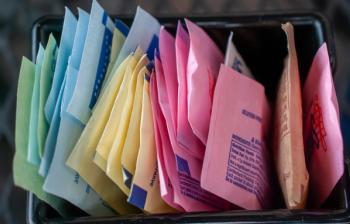
Liquid chromatography–mass spectrometry (LC–MS) was used to determine if there is a link between artificial sweeteners and breast cancer.
This week on Chromatography Online, leading experts shared practical insights with LCGC International on sustainable affinity methods, siRNA impurity profiling, nontarget screening, peptide tech transfer, and AI in separation science.
This week's Chromatography Online highlights offer something for every analytical scientist looking to sharpen their methods and stay ahead of the field. Discover how green chemistry principles are reshaping affinity chromatography in our conversation with David Hage, Sanduni Heenkenda, and Zoe Zingler of the University of Nebraska–Lincoln, then dive into our two-part interview with Novartis's Martina Lioi on pairing IP-HILIC with reversed-phase chromatography to map impurities in fatty acid–linked siRNAs. If you work in nontarget screening, don't miss Stockholm University's Anneli Kruve on why toxicity predictions from MS2-derived molecular fingerprints outperform spectral-similarity methods for prioritizing unknowns in food, or Jan Christensen's look at how quantitative non-targeted screening with predicted response factors can rank environmental chemicals by concentration and toxicity. Peptide method developers will find practical guidance in our expert panel on GLP-1 methods, which pinpoints the parameters, from temperature and flow rate to dwell volume, that make (or break) robustness and tech transfer. Curious about where artificial intelligence really stands in our discipline? Gert Desmet of Vrije Universiteit Brussel separates fact from hype on AI and machine learning in separation science. And to celebrate National Chemistry Week, we're sharing "Conversations with Michael Dong," featuring highlights from his 2026 video series "HPLC in Pharmaceutical Analysis," including episodes on the hydrophobic retention mechanism in reversed-phase chromatography and choosing buffers for mobile phase A. Read, watch, and bring fresh insight back to your laboratory.
This is the Best of the Week.
LCGC International spoke to David Hage, Sanduni Heenkenda, and Zoe Zingler of the University of Nebraska-Lincoln about how green chemistry principles are reshaping affinity chromatography.1
HILIC VS RP: Separating Impurities in Fatty-Acid-Conjugated siRNAs
In this two-part of our interview, Novartis's Martina Lioi talks about pairing IP-HILIC and RP to map impurities in fatty acid–linked siRNAs,2 and using IP-HILIC and RP for lipid-siRNA impurities.3
Stockholm University’s Anneli Kruve reports that toxicity predictions from MS2-derived molecular fingerprints outperform spectral-similarity methods in nontarget screening of food.4
Panelists identify the parameters that make, or break, peptide method robustness and tech transfer, including temperature, flow rate, and dwell volume.5
Gert Desmet of the Vrije Universiteit Brussels (Belgium) examines where are we now with artificial intelligence and machine learning in separation science, as well as popular misconceptions about AI/ML in separation science.6
Quantitative non-targeted screening with predicted response factors is not for regulation but can rank environmental chemicals by concentration and toxicity.7
Conversations with Michael Dong
Michael Dong, editor of LCGC International's "Perspectives in HPLC" column, has launched a video series in 2026 called "HPLC in Pharmaceutical Analysis," which explores how the technique is used in the pharmaceutical field. In celebration of National Chemistry Week at the end of October, ChromatographyOnline.com is pleased to share "Conversations with Michael Dong" this month, featuring highlights from the series.8,9
References