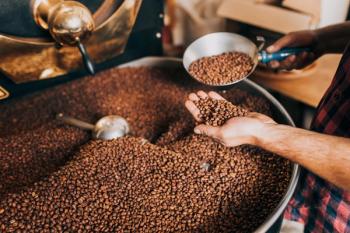
Liquid chromatography–tandem mass spectrometry (LC–MS/MS) finds low glyphosate residues of the weedkiller glyphosate in coffee beans.
This week, Chromatography Online compiled peer-reviewed research, expert interviews, and news articles spanning chromatography and spectrometry in food analysis.
This week, Chromatography Online featured LCGC International's From Peak to Plate series, which compiled the latest peer-reviewed research, expert interviews, and news articles showcasing chromatography and spectrometry in food analysis and human health. The week also covered the development of fluorinated SPME sorbents for improved PFAS extraction and detection, UV wavelength selection strategies in HPLC pharmaceutical analysis, a multi-part interview series with Antonio Ferracane on trace PAH detection in food and environmental samples, and the application of isotope dilution LC-MS/MS to investigate hormonal links to sleep apnea risk.
This is the Best of the Week.
LCGC International Presents “From Peak to Plate”
LCGC International presents “From Peak to Plate: News and Peer-Reviewed Content’1 and “Peak to Plate: Expert Insights in Food Analysis,” 2 compiling the latest interviews, news articles, and peer-reviewed content highlighting the utility of chromatography in food analysis, covering various chromatography and spectrometry techniques used in improving the taste, quality, and health-related benefits of the foods we eat.
Researchers recently developed fluorinated solid phase microextraction (SPME) materials that improve the selective extraction and chromatographic detection of volatile per- and polyfluoroalkyl substances (PFAS) from complex samples. LCGC International spoke to the authors of the paper resulting from this work.3
High-performance liquid chromatography (HPLC) pharmaceutical analysis sometimes requires wavelengths beyond a drug's maximum UV absorption for optimal detection. LCGC International’s “Perspectives in HPLC” column editor Michael Dong explains.4
ASMS Interview: Antonio Ferracane
Antonio Ferracane, a tenure-track researcher at the University of Messina, Italy, discusses his group's work on trace analysis of polycyclic aromatic hydrocarbons, or PAHs, in food and environmental samples with LCGC International.5-8 PAHs are persistent pollutants formed mainly through incomplete combustion of fuel, wood, and organic matter, and are of concern for their carcinogenic and mutagenic properties.
Isotope dilution liquid chromatography-tandem mass spectrometry (ID-LC-MS/MS) linked higher sleep apnea risk to lower testosterone and sex hormone-binding globulin (SHBG) levels.9
References
1. From Peak to Plate: News and Peer-Reviewed Content. Chromatography Online website
2. From Peak to Plate: Expert Insights in Food Analysis. Chromatography Online website
3. Lee, S.; Williams, M.; Gionfriddo, E. et al. Development of Fluorinated SPME Sorbents for Selective PFAS Extraction and Chromatographic Analysis. Chromatography Online website
4. Dong, M. UV Wavelength Selection in Stability-Indicating HPLC Methods.Chromatography Online website
5. Ferracane, A.; Jones, K. A GC-MS Approach to Boost Trace PAH Detection Sensitivity. Chromatography Online website.
6. Ferracane, A.; Jones, K. Can Less Sample Cleanup Still Mean Accurate Results?Chromatography Online website.
7. Ferracane, A.; Jones, K. What Cleanup Steps Mean for Recovery and Accuracy in PAH Analysis. Chromatography Online website.
8. Ferracane, A.; Jones, K. Cleanup-Free PAH Analysis: Meeting EU Requirements. Chromatography Online website.
9. Chasse, J. ID-LC-MS/MS Analysis of Hormones in Sleep Apnea. Chromatography Online website.