Best of the Week: Supercritical Fluid Chromatography, MS Data Systems, Bioanalytical LC–MS
Key Takeaways
- Modern SFC instruments show enhanced robustness and sensitivity, expanding their use beyond low-polarity compounds and into regulated environments.
- Thermo Fisher's Chromeleon 7.4 software enhances lab efficiency and compliance, supporting various MS instruments and offering centralized data management.
This week, LCGC International published a variety of articles on hot topics in separation science. From an interview about the latest advancements in supercritical fluid chromatography (SFC), a news article about a new product from Thermo Fisher, and an article about bioanalytical liquid chromatography–mass spectrometry (LC–MS), we’ve highlighted some of the most popular articles that were published this week.
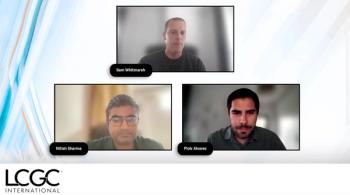
Modern supercritical fluid chromatography (SFC) instruments exhibit improved robustness and sensitivity, enabling their use in regulated environments and expanding their applicability beyond low-polarity compounds. Advances in column technology and modifier usage have broadened SFC's range, allowing for the separation of highly polar analytes and complex mixtures (1). Current SFC methods often operate outside supercritical conditions, using high modifier percentages to analyze or purify compounds of higher polarity (1). Despite advancements, challenges remain, such as the need for more bespoke columns and extended pressure ranges, limiting SFC's full potential. In this interview, LCGC International sat down with John Reilly, Maria Kristina Parr, and Larry Miller discuss the latest advancements in SFC.
In a recent news release, Thermo Fisher Scientific has announced Chromeleon 7.4, which is an updated chromatography and mass spectrometry (MS) data system designed to streamline enterprise-level laboratory operations and regulatory compliance. The software supports single quadrupole, triple quadrupole, and high-resolution accurate mass (HRAM) instruments, with a focus on targeted quantitative workflows (2). By enabling centralized data acquisition, remote access, and networked storage, Chromeleon 7.4 reduces manual handling and improves efficiency for high-throughput labs (2). According to the company, some of the key features include visualization tools, audit trails, electronic signatures, and secure user management, aligning with good practice and 21 CFR Part 11 standards (2).
In regulated bioanalysis, reliable quantitative methods depend heavily on sample preparation, which plays a pivotal role in ensuring selectivity, cleanliness, and high-quality LC–MS data. Although rapid, low-cost approaches like protein precipitation or “dilute-and-shoot” have been popular for decades, they can introduce matrix effects, signal drift, and costly instrument fouling (3). More selective techniques, such as liquid–liquid extraction (LLE), supported-liquid extraction (SLE), and especially solid-phase extraction (SPE), provide greater robustness and are increasingly vital, particularly for biologics (3). Balancing efficiency with selectivity ultimately ensures data integrity, reduces downtime, and avoids the long-term costs of relying solely on “quick and dirty” strategies.
A recent study highlighted the advantages of coupling anion exchange chromatography (AEX) with MS for analyzing charge heterogeneity in IgG4-based monoclonal antibodies (mAbs). Although cation exchange (CEX) is traditionally effective for IgG1 mAbs with high isoelectric points, it is less suited for IgG4 variants (4). The native AEX–MS method provided sharper separation, better detection of acidic and basic variants, and improved Fc glycosylation analysis, especially after PNGase F treatment (4). Importantly, it enabled monitoring of site-specific deamidations without peptide mapping, reducing time and error risk. This makes AEX–MS a valuable tool for IgG4 therapeutic antibody characterization.
A recent announcement recognized Knauer Wissenschaftliche Geräte GmbH has been nominated for the 2026 German Sustainability Award in the Products category. This award recognizes a company that is committed to producing environmentally responsible laboratory technology. The company’s Azura (U)HPLC systems emphasize energy efficiency, recyclability, and reduced solvent use, earning the ACT-Ecolabel from My Green Lab (5). Knauer also fosters a strong internal sustainability culture through employee-driven initiatives and its annual Sustainability Week (5). CEO Alexandra Knauer highlighted the nomination as confirmation of the company’s mission to deliver sustainable solutions that benefit customers, society, and the environment.
References
- Matheson, A. SFC Europe 2025: An Interview with John Reilly, Maria Kristina Parr, and Larry Miller. LCGC International. Available at:
https://www.chromatographyonline.com/view/sfc-europe-2025-an-interview-with-john-reilly-maria-kristina-parr-and-larry-miller (accessed 2025-10-02). - Hroncich, C. Thermo Fisher Launches Chromeleon 7.4 for Networked Mass Spectrometry, Chromatography, and Enterprise Data Management. LCGC International. Available at:
https://www.chromatographyonline.com/view/thermofisher-chromeleon-7-4-networked-mass-spectrometry-chromatography-enterprise-data (accessed 2025-10-02). - MacNeill, R. The Importance of Sample Preparation in Quantitative Bioanalytical Liquid Chromatography–Mass Spectrometry. LCGC International. Available at:
https://www.chromatographyonline.com/view/the-importance-of-sample-preparation-in-quantitative-bioanalytical-liquid-chromatography-mass-spectrometry (accessed 2025-10-02). - Rojahn, A. M.; Eßer, D. Native Anion Exchange Chromatography Coupled to Mass Spectrometry for the Charge Variant Analysis of IgG4-based Monoclonal Antibodies. LCGC International. Available at:
https://www.chromatographyonline.com/view/native-anion-exchange-chromatography-coupled-to-mass-spectrometry-for-the-charge-variant-analysis-of-igg4-based-monoclonal-antibodies (accessed 2025-10-02). - Jones, K. Knauer Nominated for German Sustainability Award 2026. LCGC International. Available at:
https://www.chromatographyonline.com/view/knauer-nominated-for-german-sustainability-award-2026 (accessed 2025-10-02).
Newsletter
Join the global community of analytical scientists who trust LCGC for insights on the latest techniques, trends, and expert solutions in chromatography.