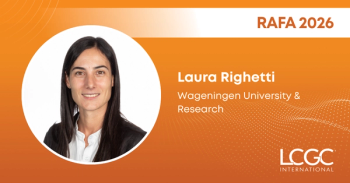
Laura Righetti explains why quantification, not instrumentation, still keeps mass spectrometry imaging (MSI) out of routine food safety testing.
Top articles published this week include several video interviews with key opinion leaders about the state of chromatography in 2026.
This past week, LCGC International published a variety of articles on hot topics in separation science. Now that the year 2026 has gotten underway, we spoke with various experts in chromatography and separation science to get their thoughts about how 2026 is shaping up in their industry. Their thoughts and insights provide a blueprint as to what to expect this year in chromatography. Also, we highlight a couple recent studies that used gas chromatography (GC) and related techniques.
This is the Best of the Week.
In the year 2026, chromatography is undergoing a series of advancements and challenges. From artificial intelligence (AI) to challenging economic conditions, chromatographers are dealing with several conflicts simultaneously. In our “Voices from the Analytical Front Line” video series, associate editorial director Kate Jones speaks with experts in the field, asking them about the current trends in chromatography the public should be paying attention to. In this video, LCGC International sat down with Bingchuan Wei, who is a senior principal scientist at Genetech Inc (1). He addresses the key developments occurring in chromatography, and he shares his perspective on how the current analytical technologies will shape 2026 (1).
A continuation of the ongoing “Voices from the Analytical Front Line” video series, LCGC International spoke to Thomas Letzel, a key opinion leader in chromatography. Letzel is an analytical chemist who has had an extensive career working in analytical screening using chromatography techniques such as liquid chromatography (LC) and gas chromatography (GC) with mass spectrometric (MS) detection (2). Letzel is currently serving as a lecturer at TUM and the Founder and Executive Director of AFIN-TS Gmbh. In this video segment, Letzel discusses the latest trends in non-targeted screening and how these might evolve over the course of 2026 (2).
In this segment of the “Voices from the Analytical Front Line” video series, LCGC International sat down with Susanne Boye, who leads the field-flow fractionation (FFF) labs and serves as deputy head of the Department of Advanced Macromolecular Structure Analysis (3). Boye explains how advanced analytical technologies will continue to play a role in influencing how chromatography advances in 2026 (3). Boye also addresses the current industry needs.
Researchers from the University of Washington and the University of Wisconsin–Madison conducted the first comprehensive two-dimensional gas chromatography–time-of-flight mass spectrometry (GC×GC-TOFMS)-based study examining how pH influences the volatile organic compound (VOC) profile of Malassezia pachydermatis, a lipid-dependent skin yeast capable of shifting from commensal to pathogenic behavior (4). By analyzing VOCs produced at three pH levels, the team used tile-based F-ratio chemometrics and new R/RSD metrics to distinguish yeast-derived signals from media effects (4). A support vector machine (SVM) model validated analyte classification with high accuracy. This work demonstrates how advanced multidimensional chromatography and chemometrics can unravel complex microbial signaling linked to pathogenic transitions.
A new study analyzed 76 baijiu-based soy sauces produced between 2010 and 2024 using GC–MS, revealing clear aging trends across 77 volatile compounds (5). The results showed that esters generally decrease during aging, while acids and alcohols increase. Through multivariate analysis, ethyl lactate emerged as a key compound with major concentration changes (5). Further experiments demonstrated that ethyl lactate selectively inhibits the release of 28 aroma-active compounds, which was an effect influenced by molecular interactions and strongest for non–acid classes (5). Sensory evaluation confirmed its impact on flavor, offering new mechanistic insight to guide baijiu aging, blending, and quality control.