

Feature|Videos|September 30, 2024
Challenges in Analyzing Antisense Oligonucleotides (ASOs)
Author(s)LCGC Editors
The main focus of this Peer Exchange is on the state of the art for antisense oligonucleotides (ASOs) in particular. The panel shares their perspectives on the most pressing analytical challenges the industry currently faces regarding these oligonucleotides.
Episodes in this series









The panel discusses current challenges in oligonucleotide analysis, particularly in the case of ASOs. Claus Rentel of Ionis Pharmaceuticals mentions that often, working with ASOs, the impurity profile is a main concern. Arnaud Delobel adds that mass spectrometry (MS) is required to analyze oligonucleotides fully. From an academic perspective, Mark Dickman suggests that the diversity of new chemical modalities and modifications present additional complexities.
Related to this article

Gas chromatography (GC) tests show spoilage yeasts alter flavor and raise alcohol in NoLo beer.
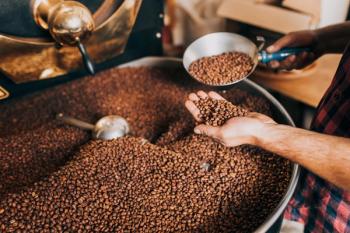
Liquid chromatography–tandem mass spectrometry (LC–MS/MS) finds low glyphosate residues of the weedkiller glyphosate in coffee beans.

This week, Chromatography Online explored how the technique is advancing wastewater drug monitoring, siRNA method development, and food safety testing, with previews of RAFA 2026 and a return to HPLC fundamentals with Michael Dong.

Recent EU legislation on PFAS shifts from monitoring individual compounds toward managing them as a chemical class.

In this seventh part of " Conversations with Michael Dong," a series on fundamentals of HPLC in pharmaceutical analysis, LCGC International’s "Perspectives in HPLC" column editor explains why 2.1-mm i.d. columns are less preferred for pharmaceutical quality control.

Ultrahigh-performance liquid chromatography–quadrupole time-of-flight mass spectrometry (UHPLC–QTOF-MS) shows how soaking and cooking break down soybean fats.

Liquid chromatography–tandem mass spectrometry (LC–MS/MS) links altered metabolism to lingering symptoms in Ebola survivors.

Nicolai Zederkopff explores chromatography’s role to help implement the maximum tolerable level (MTL) framework for food adulteration to translate analytical results into compliance decisions.
Trending on LCGC International
1
GC Reveals How Yeasts Spoil Non-alcoholic Beer
2
Conversations with Michael Dong: Why 2.1-mm i.d. Columns Are Less Preferred for Pharmaceutical Quality Control
3
AI/ML Now: Bayesian Optimization and Automation for siRNA Method Development (Part Two)
4
Mass Spectrometry Imaging in Food: The Power and the Limits
5