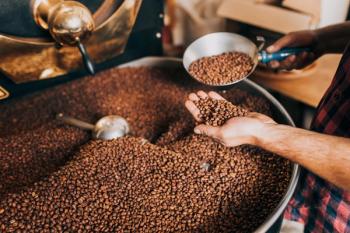
Liquid chromatography–tandem mass spectrometry (LC–MS/MS) finds low glyphosate residues of the weedkiller glyphosate in coffee beans.
Researchers from Italian institutions investigated how the storage and transport of cocoa beans in jute bags from 15 countries contribute to mineral oil hydrocarbon (MOH) contamination, finding—using advanced chromatographic techniques including GC×GC-FID/MS.
Researchers from the University of Udine (Italy) and Industria Cioccolato e Affini Morbegno (Morbegno Chocolate and Related Industries, Orsegnio, Italy) investigated how the storage and transportation of cocoa beans in jute bags—shipped to Italy from 15 countries—affects mineral oil hydrocarbon (MOH) contamination in both whole and shelled beans. To achieve their goal, the contamination in virgin cocoa beans from various origins (as well as in cocoa beans after storage and transport in jute bags) was evaluated. Their study also involved the analysis of the bags upon arrival at the company for a rough estimation of their original contamination levels as well as to evaluate migration. High-performance liquid chromatography-gas chromatography (HPLC-GC) was used for analysis of whole cocoa beans before and after transport in jute bags, and two-dimensional gas chromatography (GCxGC) was used to further characterize a selected number of jute bag extracts and a cocoa bean sample. A paper based on their work was published in Food Chemistry (1).
MOHs are complex mixtures of saturated (MOSH) and aromatic hydrocarbons (MOAH) of petrogenic (derived from petroleum [2]) origin which are particularly prone to contaminate fatty foods such as cocoa products. MOSH comprise n-alkanes, isoalkanes, and cycloalkanes; all of which can bioaccumulate in human organs and tissues. MOAH mainly consist of mono- and di-aromatics, as well as lower amounts of tri- and poly-aromatic compounds with alkyl substituents. Tri- and polyaromatics with low alkylation are suspected to be carcinogenic and genotoxic substances (3). While there are currently no established legal limits for MOSH and MOAH in food products, the European Standing Committee on Plants, Animals, Food and Feed issued a statement in 2022 recommending the removal from the market of products which exceeded the quantification limits set by the Joint Research Centre for various food categories, based on their fat content: e.g., 1.0 mg/kg for products with a fat content between 4% and 50%, and 2.0 mg/kg for products with a fat content exceeding 50% (4,5).
According to the results of the project presented at the Hamburg Cocoa Symposium, jute bags labeled as food grade may contain significant levels of MOSH and MOAH, which may increase through migration from the recycled cardboard used to line the interior walls of trucks to prevent condensation from soaking the jute sacks (6).
The reference method for determining mineral oils in food and packaging is HPLC-GC with flame ionization detection (FID) (7), which requires appropriate sample preparation depending on matrix complexity and potential interferents. For better characterization of contamination, GC×GC, combined with mass spectrometry (MS) for identification and FID for quantification, is recommended (8,9).
The researchers found that on-line HPLC-GC analysis of 28 whole cocoa beans before and after transport in jute bags contaminated with MOH revealed that average MOSH increased from 0.9 to 9.6 mg/kg, with MOAH reaching 2.3 mg/kg. On average, 4 % of the MOH migrated into whole beans reached the shelled beans, with a cut-off at n-C25. Post-transport jute bags contained diverse mixtures of MOH, varying in both amount and molecular weight distribution, as well as MOAH percentage. It was estimated that MOAH n-C10-25 exceeding 220 mg/kg in new jute bags expose whole beans to contamination above 2 mg/kg. GC×GC coupled to single quadrupole mass spectrometry (MS) proved effective for detailed MOH characterization. Throughout the supply chain, MOH contamination was transferred to cocoa mass, sometimes influenced by external lubricant inputs, and partitioned into cocoa butter and powder according to fat content (1)
“Despite the improvements introduced by the IJO through the implementation of criteria aimed at limiting MOH contamination in jute bags used for food contact,” the authors wrote, “this study highlights that the transport and storage of cocoa beans in jute bags still pose significant contamination risks. Notably, over half of the analyzed cocoa beans contained detectable levels (>0.2 mg/kg) of MOAH, with 36% surpassing the proposed MOAH limit (2 mg/kg). While migration studies show that contaminants can reach up to n-C28–30 in whole beans, the cocoa shell's barrier properties restrict migration in shelled beans to no more than n-C25. Consequently, less than half of the MOH transferred from jute bags to whole beans is then transferred to the shelled beans, indicating that there is partial mitigation by the shell.” (1)
“This work demonstrates that advanced analytical techniques such as GC×GC-FID/MS, even when equipped with single quadrupole systems, provide critical insights into the complexity of MOH contamination, facilitating source attribution and risk assessment,” the authors wrote. “Overall, the findings underscore the necessity of stringent control over jute bag quality and processing conditions. Implementing stricter standards and comprehensive analytical approaches is essential to effectively mitigate MOH contamination and ensure the safety of cocoa-based food products.” (1)
Read More on Similar Topics:
References