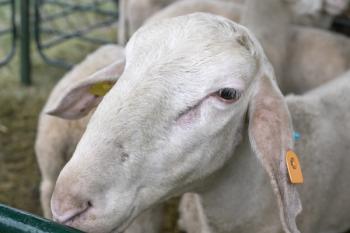
Targeted ultrahigh-performance liquid chromatography (UHPLC) links blood metabolites to sheep feed efficiency.
The future of chromatography and the laboratory environments are at an exciting crossroads, shaped by technological innovation. In a forward-looking roundtable, Daniela Held, a seasoned industry leader, Susanne Boye of the IPF Dresden, and Claudia Zielke of Vaxcyte shared their insights on the skills needed to lead modern teams and the emerging trends that will redefine their field. They envision a future where advanced hyphenated techniques and artificial intelligence (AI) generate unprecedented insights, all within labs defined by trust, flexibility, and robust support systems. This article explores their vision for the evolving lab culture and the next frontiers in analytical science.
The panelists agreed that technical expertise alone is insufficient for leadership, asserting that so-called "soft skills" are paramount for success. Boye explained that leaders must be able to clearly communicate their vision and motivate their team to follow it. She highlighted empathy as a particular strength and a key advantage in preventing conflicts, especially within multicultural teams where misunderstandings can easily arise from different communication styles. She believes that respectful and proactive communication is the bedrock of a harmonious and productive team.
Daniela Held expanded on this, emphasizing that a leader must actively manage different personalities to ensure every team member feels heard. She advocated for a direct and efficient communication style, sharing a valuable lesson from a former leader who always asked, "What is the ask?" This approach fosters a culture where team members feel free to request what they need openly.
Zielke offered two additional leadership qualities: genuine listening and humility. She argued that authentic listening builds up trust that is just as vital in the workplace as in one's private life. Furthermore, a leader must have the humility to acknowledge that they don't know everything. A great leader, she noted, can learn from those in more junior positions and knows when to step back and let others take responsibility. Held agreed with this sentiment, stating that the best leaders actively hire people with superior skills, viewing them not as threats but as partners for collective growth.
To create environments where all scientists, and especially women, can thrive, the panelists recommended concrete changes to lab culture and policies. Boye identified flexibility and teamwork as the two most critical factors. She pointed out that the pandemic proved the viability of remote work and online meetings, offering crucial flexibility for parents and caregivers. She also advocated for a shift from a competitive to a collaborative culture, where scientists freely share expertise and data to drive innovation, ensuring no one has to "fight alone."
Held focused on the profound importance of fostering a "culture of trust." She believes this is particularly beneficial for younger women who may struggle with self-esteem, as it allows them to focus on their work without fear and enables the entire team to generate superior results.
Zielke pointed to the power of formal diversity initiatives and informal community-building. She mentioned efforts to standardize techniques like field-flow fractionation (FFF), which helps retain talent by providing clear career pathways. Beyond official policies, she championed the creation of social clubs within workplaces, which facilitate natural networking. Boye shared Dresden’s “Science Tram,” a traveling event that unites scientists and sparks new ideas, as an inventive model for community building.
The technological horizon for the field is bright, focused on extracting more profound insights from increasingly small sample amounts. Boye expressed her interest in coupling separation techniques like FFF with ever-more powerful detectors. The goal, she explained, is to get the maximum amount of information from a single sample run, citing her own recent work directly coupling asymmetric flow field-flow fractionation (AF4) to neutron scattering, which has not been done before.
As these hyphenated techniques generate vast and complex data sets, both Boye and Held see artificial intelligence (AI) as an essential tool for the future. Boye envisions AI not only interpreting the huge amount of data, but also saving time by simulating experiments and optimizing workflows. Held agreed, seeing AI as a potential aid in addressing the challenges of data accuracy and precision. However, she also issued a crucial warning from an industry perspective, identifying a gap in the understanding of these advanced techniques' limitations. She stressed that continuous education is vital to interpret the results, as this will be used to develop products for use out in the field.
Finally, Zielke shared her specific excitement about the future of FFF. She identified the major frontier as the broader implementation and standardization of the technique in industry, which requires well-defined validation pathways and regulatory recognition from bodies like the U.S. Food and Drug Administration (FDA) and European Medicines Agency (EMA). While this work is ongoing, she reported promising progress, such as a recent instance where FFF data supported an FDA guidance. For Zielke, the future of chromatography is not just about new technology, but about building the robust, standardized frameworks and collaborative communities that allow these technologies to deliver on their full promise.