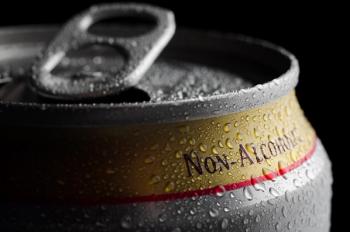
Gas chromatography (GC) tests show spoilage yeasts alter flavor and raise alcohol in NoLo beer.
The first session at HTC-19 in Leuven on Wednesday 27 May 2026 kicked off with an inspiring tryptch of speakers —Caroline West, Leon Barron, and Jackie Mosely—exploring innovative aspects of modern hyphenated chromatography.
Caroline West (University of Orleans, France) started the session with a talk that focused on coupling supercritical fluid technologies to multidimensional analytical systems: Under Pressure: Bringing Supercritcal Fluids To Multidimensional Analysis Systems. Her talk focused on how developments in supercritical fluid chromatography (SFC) and supercritical fluid extraction (SFE) are leading to integrated and environmentally sustainable workflows.
West explained that supercritical fluids — typically pressurized carbon dioxide modified with short-chain alcohols — offer several analytical advantages, including reduced solvent consumption, strong compatibility with mass spectrometry and highly tunable separation selectivity. Although SFC and SFE have existed for decades, improvements in instrumentation and column technologies have significantly expanded their applications in recent years.
Particular attention was given to online systems such as SFE–SFC–MS, where extraction and chromatographic separation are directly connected. These configurations reduce sample handling, minimize contamination and improve recovery of unstable or low-abundance analytes. West noted that such systems are especially attractive for applications involving natural products and trace-level contaminants.
West also explored emerging two-dimensional supercritical fluid systems, including SFC–SFC–MS. These platforms could provide highly orthogonal separations through combinations of chiral, achiral and mixed-mode stationary phases, she indicated. However, West emphasized that the compressibility of supercritical fluids introduces technical challenges, particularly at pressure interfaces and during method development.
Examples involving natural products and leachables from medical plastics illustrated both the promise and practical difficulties of implementing multidimensional supercritical fluid workflows.
Leon Barron (Imperial College London, UK) presented The Challenges and Scale for Meaningful Environmental Research. His talk examined how analytical chemistry is adapting direct-injection liquid chromatography to the immense scale and complexity of modern environmental pollution.
Barron noted that the number of chemicals in commercial use now exceeds hundreds of thousands worldwide, creating major challenges for environmental monitoring and risk assessment. To address this complexity, his group has developed high-throughput workflows based on coupled to high-resolution mass spectrometry (HRMS) for wastewater and surface water analysis.
These methods generate extensive datasets with minimal sample preparation, enabling large-scale monitoring across both time and geography. Barron also highlighted how such datasets can support predictive modelling approaches, including estimation of toxicity and analytical behaviour for previously uncharacterized compounds using structural information.
Beyond instrumentation, the presentation highlighted innovative sampling strategies designed to increase monitoring coverage while reducing cost. These included low-cost 3D-printed passive samplers and citizen-science-based grab sampling campaigns.
Barron further emphasized that large-scale analysis introduces logistical and environmental challenges of its own. Automated sample handling remains essential even for simplified workflows, while laboratory sustainability is becoming an increasingly important consideration. Efforts to reduce waste through reuse of laboratory plasticware were presented as part of a broader push toward greener analytical practice.
Overall, the talk framed environmental analytical chemistry as a discipline increasingly shaped not only by technological capability, but also by practicality, sustainability and scalability.
Jackie Mosely (University of York, UK) ended this session with a talk entitled “Comparison ofTechnologies for Non-targeted Analysis of Police-Seized Substances”, which was collaboration between the University of York, North Yorkshire Police and public health organizations.
Mosely explained that rapid identification of emerging substances is critical for both law enforcement and harm reduction efforts. The challenge lies not only in detecting compounds, but also in generating actionable intelligence quickly enough to inform public health responses.
The study compared several high-resolution mass spectrometry platforms, including Orbitrap liquid chromatography–mass spectrometry, ion mobility quadrupole time-of-flight systems and two-dimensional Fourier transform ion cyclotron resonance mass spectrometry. Both commercial and in-house data analysis pipelines were evaluated.
According to Mosely, data-dependent acquisition workflows enabled detection of a broader range of chemical constituents than conventional targeted approaches, including newly emerging substances absent from existing spectral libraries. In parallel, two-dimensional FT-ICR-MS/MS demonstrated the advantages of comprehensive data-independent analysis by simultaneously fragmenting all precursor ions within complex samples.
The workflows were applied to analytically challenging seized materials, including samples associated with unexplained physiological responses or suspected fatalities. Mosely emphasized that combining complementary analytical platforms improved characterization of trace-level and unexpected compounds within highly complex matrices.
The presentation concluded by highlighting the importance of close collaboration between academic laboratories, law enforcement agencies and public health organizations in delivering timely forensic intelligence.