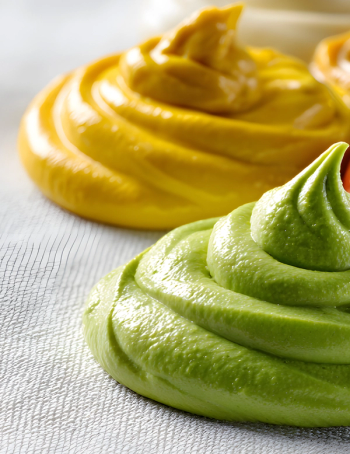
Gas chromatography–mass spectrometry (GC–MS) and ion chromatography profile wasabi and mustard heat and acidity.
Spark Holland?s new ultra high pressure pump, the SPH1240?, provides 18,000 psi for the entire range of UHPLC analytical flow rates, guaranteeing a rapid and reproducible gradient.
Reliable, rapid and reproducible high pressure gradient for UHPLC
Spark Holland’s innovative new ultra high pressure pump, the SPH1240™, provides 18,000 psi for the entire range of UHPLC analytical flow rates. Accurate flow delivery combined with dedicated adjustment of mixing volume and compressibility compensation guarantee a rapid and reproducible gradient.
Ultra high pressure pumps enable use of longer columns, higher flow rates and smaller particles. The optimum combination of these parameters may vary largely with assay requirements and the high separation speed and resolution of UHPLC can only be realised if the UHPLC pump is able to deliver accurate and steep solvent gradients. High-pressure solvent mixing alone can provide such a demanding combination of accurate solvent composition and rapid response. The SPH1240 has been optimised with these demands in mind to deliver a high pressure gradient from 500 - 18,000 psi at rates of up to 5 ml/min.
Ergonomic design allows the pumpheads to slide forward for easy access and connection and an optional integrated degasser is available along with extra solvent selection options for both pumps. The new SPH1240 adds to the range of high quality, reliable solutions for front-end UHPLC, combining with Spark's UHPLC compatible autosamplers, ALIAS™ and INTEGRITY™, for state-of-the-art technology.
Contact details:
Analytica Shanghai : Booth # 1240