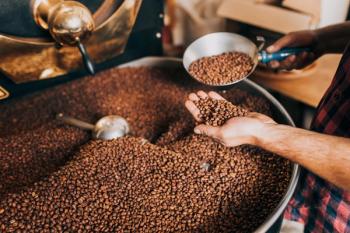
Liquid chromatography–tandem mass spectrometry (LC–MS/MS) finds low glyphosate residues of the weedkiller glyphosate in coffee beans.
Two true pioneers who have, without a doubt, evolved the science and reputation of separation science globally, Pat Sandra and Luigi Mondello, spoke to LCGC International about the dynamics behind this essential event in the chromatography calendar: the ISCC and GC×GC Symposium. The 44th International Symposium on Capillary Chromatography and 21st GC×GC symposium (Riva 2026), which will take place from 17–22 May 2026 at the Congress Centre, Riva Del Garda, Italy.
Q: What is the history of ISCC? Why and where was the conference launched? What were your particular highlights from the inaugural event?
Pat Sandra: In 1975, Rudolf Kaiser, founder of the Institute of Chromatography (IfC), Bad Dürkheim, Germany, organized a multi-day symposium (4–7 May, 1975) in the beautiful mountain region of Hindelang, Oberallgäu, Germany. The main purpose of the meeting was primarily to discuss the secrets of column making and to detail the practical use of glass (gas) capillary chromatography, which in the early 1960s had strong theoretical support but was claimed to be too difficult in practice, and also the results were considered too unreliable to be applied in industrial laboratories.
All aspects of the technology were covered, but the heart of the system, namely the column, was by far the main focus in presentations and sometimes heated discussions between actors, such as “How do you deactivate the glass surface?” and “What is the coating method?: the static method, the dynamic method, or the mercury drop method?”. In other words, mainly trying to find out which “tricks” colleagues used to produce reproducible glass capillaries and doing so with maximum efficiency and all possible polarities and selectivities. Although the Proceedings of the meeting with complete manuscripts were made available to the participants at the beginning of the meeting, the “tricks” details often remained obscure.
At the end of the meeting all participants were very grateful to Rudolf and coworkers for the superb scientific and social programs. He was nearly forced by all of us to reorganise the meeting in Hindelang as a biennal event.
The second meeting took place 1-5 May, 1977. From the Proceedings it was clear that glass capillary column technology once more overruled the program. The progress made was illustrated by important applications like dioxin analysis and separation of enantiomers. Advancements in injection and detection came also in the picture. Interestingly, some American “glass capillary column” propagandists enhanced the scene. The 1977 meeting coincided with the 75th birthday of Marcel Golay, the inventor of open tubular (capillary) columns and the 20th anniversary of his first publication on this subject.
At the Third International Symposium on Glass Capillary Chromatography, 29 April–3 May 1979, one lecture drew all the attention and even caused the title of the 1981 meeting to be changed! The word 'Glass' was removed. The reason was the lecture by R. Dandenau and E. Zerenner entitled “An investigation of Glasses for Capillary Chromatography”. The best inert material was clearly fused silica (less than 1 ppm metals), which could be drawn as a flexible open tube (FSOT), or “fused silica open tubular,” was in the beginning externally coated with a silicone as a protective layer and later with temperature-resistant polyimide. The admiration in the room for the beautiful chromatograms on SP 2100 (a methyl silicone) and Carbowax 20M (HMW polyethylene glycol) for polar and apolar compounds, but also the nervousness of commercial column makers, was clearly noticeable! Other important contributions dealt with new injection systems such as cold-on-column injection, head-space analysis, high-temperature applications, two-dimensional capillary GC, and a fish out of water (?): Open Tubular Capillary LC.
For the fourth Symposium (3–7 May 1981) in Hindelang, Rudolf (Chairman) set up an organizing committee to help and support him. The committee consisted of W. Bertsch, C. Cramers, J. Rijks, J. Roeraade, myself, and G. Schomburg. The success of the meeting was evident in advance from the 900-page Proceedings. Participants were mainly from Europe, but all the major countries active in our field were represented, that is USA, Canada, Japan, China, South Africa, etc. All aspects of capillary gas chromatography were covered. The state-of-the-art of glass and FSOT column quality was presented through a round robin test in which eight laboratories participated. The progress made in the period 1975–1981 was remarkable and led us predict that FSOT columns were the way to go not only for practical reasons but also for sustainability reasons. Capillary supercritical fluid chromatography was also covered and we expected contributions of capillary pressure end electro-driven separation methods for the 5th symposium.
Q: When and why did the conference move to Riva Del Garda? Was there a shift in focus?
PS: There are two important reasons why we moved from Hindelang to Riva. With only about 5,200 residents, the beautiful village had become too small to allow the Symposium to grow and develop. After the closing address of the 1981 meeting, Rudolf invited me to have a walk in the Alps enjoying the beautiful surroundings. I thought he wanted to brainstorm about a next location, but to my great surprise he asked/forced me to take over the chairmanship of the next meeting (1983). I could not refuse; he had become over the Hindelang years a very good friend whose knowledge, enthusiasm, and entrepreneurial skills I admired!
Back home I immediately consulted my Italian friend, Sorin Trestianu (Carlo Erba Strumentazione, later Thermo Fisher Scientific, Italy), for helping us in selecting a “Hindelang-like” location in the North of Italy. After visiting several locations, I arrived with Sorin and Jacques Rijks (Eindhoven University of Technology, The Netherlands) in Riva del Garda and no doubt, this was the perfect solution to organize a long-term event, which has now reached the twentieth time in 2026!
The spirit of the Hindelang meeting was simply transferred to the Riva del Garda meetings and more topics were programmed to follow the state-of-the-art of microcolumn pressure and electro-driven separations together with miniaturized sample preparation.
Q: When did the GC×GC symposium start running in parallel? How has GC×GC evolved since then and what application areas does it now play a pivotal role?
PS: After two GC×GC meetings organized in Volendam, the Netherlands (2003) and Atlanta, USA (2004) we invited the organizing and scientific committees to join the ISCC meeting in 2006 in Riva del Garda and this for following reason. GC×GC first theoretically described in 1984 by J. Giddings and practically iillustrated in 1991 by J. Phillips and Z. Liu, turned out from the recent literature to be incredibly promising and advancements in this ultra high resolution capillary gas chromatographic development should also be addressed in the ISCC meeting. This marriage turned out to be exceptionally positive and this year we are celebrating our twentieth anniversary. Although, I have to be honest. At the first GC×GC discussion session in Riva, I had to step in because, in the excitement, it was suggested to change the name of the next meeting into 4th GC×GC and 30th ISCC!
Q: Were there any significant presentations you think evolved the theory and practice of separation science that were presented at Riva?
PS: Too many to list ... for example, the Proceedings of the 18th ISCC include three volumes totaling 2,308 pages with a total weight of 3.3 kg. This last point was the reason why we had to switch to CD-ROMs followed by USB sticks!
… and at the Farewell cocktail of the 34th ISCC and 7th GC×GC Symposium I invited Luigi Mondello to have a walk around the Lake Garda in the Italian Alps enjoying the beautiful surroundings and told him; it's your turn Luigi and I feel that you will accept this, which will make me and Rudolf very happy.
Q: Luigi, You took over the conference in 2012 and the event was cancelled during and after COVID? Why did you think it was important to revive the conference?
Luigi Mondello: Taking over the leadership of this symposium in 2012 was both a profound honor and a significant responsibility, as I followed in the footsteps of a pioneer like Prof. Pat Sandra. For years, Riva has served as the home of capillary chromatography, fostering a unique scientific community and I felt a great sense of responsibility to maintain this event as the global benchmark for separation science.
The cancellations during the COVID-19 pandemic were a difficult but necessary pause, as we believed that a virtual format simply couldn't capture the 'Spirit of Riva' – I mean, that irreplaceable synergy that occurs when the world’s leading experts and young researchers gather in person by the lake.
During what we felt as incredibly long time, scientific innovation in capillary chromatography and GC×GC has continued to move at a rapid pace, so the world needs an exceptional, in-person platform again to showcase these advancements and reconnect our global community. Thus I believe relaunching the conference now is essential, as this year’s revival will be an important proof of passion and resilience.
Q: What makes the conference unique?
LM: Since its first edition in 1975 in Hindelang (Germany), the ISCC symposium series has established its reputation as a premier event for microcolumn separation techniques, including capillary GC, microcolumn LC, and electromigration techniques. For any professional in the field, this symposium is more than just a conference; it is an essential forum for staying at the absolute cutting-edge of separation science. Whether you are in academia or industry, the event provides a unique environment where theory meets practical application.
The Riva del Garda a unique blend of world-class scientific rigor and an informal, collaborative atmosphere fostered by its stunning lakeside setting.
Q: Why should chromatographers attend?
LM: Being part of the Riva conference is vital for scientists to gain direct access to state-of-the-art in separation science, technological innovation, and networking. Attendees will have the chance to interact with world-renowned scientists and industry leaders during both formal sessions and lakeside social events. Beyond the formal lecture halls, Riva’s traditional social gatherings facilitate spontaneous exchange of ideas that often spark the next international collaboration or breakthrough.
Over the years, Riva also hosted a huge showcase of technological innovation. Science moves as fast as its tools, and our dedicated exhibition serves as a live laboratory, showcasing the very latest in instrumental innovations, automation, and advanced software. It is the best place to see, test, and discuss the equipment that will define the next decade of chromatography.
The Riva symposium is also famous for its commitment to emerging researchers, offering fellowships, travel grants, and a high-profile platform for them to present their work. Since 2018, entire cohorts of PhD students and early-career scientists have missed the chance to experience a symposium of this scale. Attending Riva will provide them the platform, the networking opportunities, and the mentorship they need to drive the future of separation science.
Q: What is new at this year’s event? Is there anything you are particularly looking forward to?
LM: This edition is being hailed as a major reboot for the community, bringing a renewed focus on assessing the latest advances, examine key industry trends and shape future directions of the field. I am particularly excited about the heavy emphasis on Digital Transformation, including the integration of artificial intelligence (AI) and machine learning (ML) for data analytics. Seeing how these tools are being used to handle the immense data sets generated by multidimensional separations (GC×GC and LC×LC) is a major highlight. Not to mention, we commit ourselves in push toward sustainable green materials and technologies in chromatography.
There is a massive backlog of innovation that requires a high-level forum for debate and demonstration, as well as for mentoring the next generation.
Q:How do you think the event will evolve in the future?
LM: I expect Riva to continue evolving as the compass for the industry, bridging academic research and real-life routine, ultimately shifting further toward miniaturization (lab-on-a-chip) and fully automated, hyphenated systems. As global challenges in clinical diagnostics, environmental safety, and biopharmaceuticals grow more complex, the symposium will likely focus even more on providing sustainable, high-speed analytical solutions that bridge the gap between academic innovation and real-world industrial application.
Further information
Website: https://iscc44.chromaleont.it/
Biographies
Pat Sandra is Founder and Scientific Advisor of the RIC group (Belgium), Emeritus Professor at Ghent University (Belgium); and the Honorary Chairman of Riva 2026.
Luigi Mondello is 2026–2028 President Elected Società Chimica Italiana (SCI) and Professor of Analytical Chemistry at University of Messina (italy) and the Chairman of Riva 2026.