
Highlights from the HPLC 2026 Conference through the Lens of LC Troubleshooting
Published: | Updated:
HPLC 2026 highlights: four talks on liquid chromatography (LC) troubleshooting and problem prevention.

Dwight R. Stoll is the editor of “LC Troubleshooting”. Stoll is a professor and the co-chair of chemistry at Gustavus Adolphus College in St. Peter, Minnesota, USA. His primary research focus is on the development of 2D-LC for both targeted and untargeted analyses. He has authored or coauthored more than 75 peer-reviewed publications and four book chapters in separation science and more than 100 conference presentations. He is also a member of LCGC’s editorial advisory board. Direct correspondence to: [email protected]
HPLC 2026 highlights: four talks on liquid chromatography (LC) troubleshooting and problem prevention.
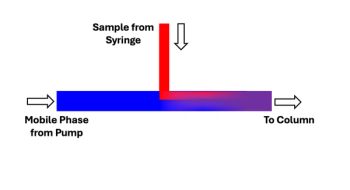
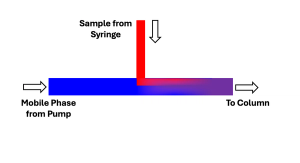
This "LC Troubleshooting" column discusses how inline mixing and feed injection mitigate solvent mismatch and peak distortion in liquid chromatography.
Liquid chromatography LC troubleshooting for oligonucleotides: fix peak splitting, denaturation smearing, and metal-surface adsorption to boost recovery.

Dwight Stoll and Martin Gilar describe the utility of liquid chromatography coupled with mass spectrometric detection (LC–MS) for analysis of oligonucleotides (ONs), discuss recommended LC modes and mobile phases, and highlight challenges encountered in these applications, along with potential solutions.

LCGC International's "LC Troubleshooting" column editor Dwight Stoll and colleagues pay tribute to the late Peter Carr, an innovator in the field of analytical chemistry.
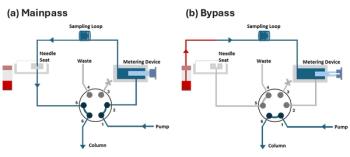
In this installment of “LC Troubleshooting,” we take a close look at how the commonly used “flow-through needle” sampler works, discuss how and where leaks can develop, and solutions to the problems when they do occur.
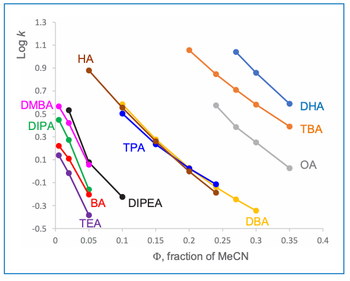
In this second installment of a multi-part series, we describe the principles of ion-pair reversed-phase high-performance liquid chromatography, discuss strategies for method development, and provide practical tips for robust liquid chromatography analyses of oligonucleotide mixtures.

The 17th Multidimensional Chromatography Workshop will be held January 13–15, 2026, at William & Mary. Here's a sneak preview of what you can look forward to.

Liquid chromatography (LC) is an incredibly powerful analytical tool that can be used to characterize materials across an astonishingly wide array of applications, ranging from 1 megaDalton polystyrenes to small genotoxic impurities of concern in pharmaceutical manufacturing. However, with this power also comes with a lot of detail related to successful operation of an LC instrument and analysis of the data it produces. This can be challenging when onboarding new LC users—how do we train someone new, where do we start, and which resources are best? In this installment, I will highlight ten high priority topics that every new user should be familiar with, no matter the training mechanism.

This article explores advanced oligonucleotide analysis techniques, including chromatography methods for therapeutic RNA, siRNA, and mRNA, enhancing nucleic acid research.

In this installment, we explore the key relationships between efficiency and mobile phase flow rate and particle size, as well as secondary determinants of efficiency, including analyte retention, size, and chemistry, and instrumental effects.

In the latest edition of "LC Troubleshooting", Dwight Stoll explores troubleshooting tips for liquid chromatography, particularly focusing on peak width challenges in large molecule separations and effective solutions.
In this month's edition of LC Troubleshooting, Dwight Stoll and his fellow researchers discuss both the benefits (improved peak shape/loading) and challenges (excessive interaction) associated with charge-doped reversed-phase (RP) columns for both analytical and preparative separations.

In this installment of “LC Troubleshooting,” Dwight Stoll touches on highlights from Pittcon 2025 talks, as well as troubleshooting advice distilled from a lifetime of work in separation science by LCGC Award winner Christopher Pohl.

The “matrix effect” is one of the sticky details that can make the use of liquid chromatography (LC) for quantitative purposes challenging, even though it is conceptually quite straightforward. In this installment of LC Troubleshooting, Dwight Stoll reviews what is being referred to during talks about “matrix effects”, and discusses some of the potential origins of the phenomenon in practice.

In this installment, I primarily discuss considerations to keep in mind when choosing buffering additives that will be used for LC methods involving UV absorbance detection.
In this installment of "LC Troubleshooting," Dwight Stoll discusses several essential principles related to when and why buffers are important, as well as practical factors, such as commonly used buffering agents, that are recommended for use with different types of detectors.

It has been more than five years since the last update in this column on the evolution of the Hydrophobic Subtraction Model (HSM) of reversed-phase selectivity and characteristics of new stationary phases recently characterized using the model. In this installment, Dwight Stoll discusses the continuing evolution of the model.
In this installment of “LC Troubleshooting,” we describe an artifact that can arise because of compound degradation during the transfer of fractions of the first dimension (1D) column effluent to the 2D separation.

In this installment of “LC Troubleshooting,” we discuss strategies that can be used to minimize the likelihood of compound degradation in the isolation process.

In this episode, podcast co-hosts Dr. Dwight Stoll and Dr. James Grinias discuss highlights and observations from HPLC 2024, which was held in Denver, Colorado in July.

In this month’s column, I highlight some of the primary considerations we face in method development and point to resources that can help users overcome uncertainty and develop highly effective 2D-LC methods.

In this installment, we apply the concepts developed in last month’s installment by demonstrating how they can be used to help troubleshoot problems in LC involving pressure and flow.

The analogy that electrons flowing in wires is like water flowing through a tube can be remarkably effective. In this installment, the basics of that analogy are discussed.

The concept of gradient delay volume (GDV) in liquid chromatography (LC) poses challenges for both beginners and experienced practitioners. The GDV, which affects the arrival time of mobile phase composition changes at the column inlet, can have a significant impact on method throughput, influencing the time required for mobile phase changes at both the beginning and end of the LC method. Different pump designs and column characteristics affect efficient use of the available analysis time, as well as overall throughput. Notably, achieving repeatable equilibration, rather than full equilibration of LC columns following mobile phase gradients, is often sufficient for many LC applications, which can also be leveraged to increase method throughput.

In this installment, I illustrate the impact of different gradient delay volumes when transferring a method between instruments and discuss some strategies that can be used to mitigate these challenges.

The gradient delay volume is arguably one of the most important, yet least appreciated, parameters that affect how gradient elution separations in LC work. This has implications both for method development and for method transfer during the lifecycle of a LC method. In this installment, I will review the concept of gradient delay volume, its physical connection to the LC instrument, and how it can impact method development and separation quality.

The 15th Multidimensional Chromatography Workshop is a free event involving keynote and contributed presentations, a poster session, and discussion groups on all multidimensional techniques, and will be held in-person on the campus of California State University, Los Angeles, from January 10 to 12, 2024.

There are three important habits and practices that can improve the effectiveness and efficiency of any troubleshooter.

Understanding how approaches to degassing have evolved is helpful for troubleshooting problems with pumps and detection.
Published: June 22nd 2026 | Updated: June 26th 2026
Published: June 10th 2026 | Updated: June 16th 2026

August 1st 2023

January 1st 2021

