James Grinias from Rowan University, New Jersey, USA, discusses sustainability and modern capillary LC systems.
James P. Grinias James Grinias is a Professor of Chemistry & Biochemistry at Rowan University. His research interests primarily focus on liquid-phase separations, especially the fundamentals of column and instrument design in liquid chromatography.
James Grinias from Rowan University, New Jersey, USA, discusses sustainability and modern capillary LC systems.
Jim Grinias from Rowan University, NJ, USA highlights advances in miniaturized capillary LC–MS that simplify system setup and improve ease of use. He also discusses low-flow challenges and how integrated components can enhance performance and reproducibility.
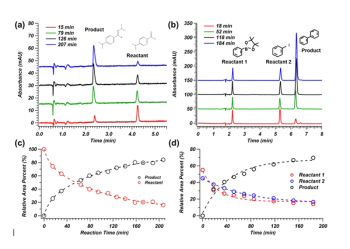
Recent developments in column technology and instrumentation for use in capillary-scale liquid chromatography are discussed. Key motivating factors for the increase in capillary liquid chromatography (LC) usage include a desire for more sustainable analytical methods (including reductions in solvent usage and waste generation) and the need for compact, field-portable systems that can be used in point-of-need settings. To achieve these goals, miniaturization strategies for both column and instrument designs have been required. The impact of these innovations in a variety of application areas—including environmental analysis, forensic testing, and pharmaceutical and biopharmaceutical manufacturing—is described. As the need for greener analytical methods continues to grow, the implementation of low-flow capillary-scale separations will also increase.

The advent of large language models for text generation and the ease with which artificial intelligence (AI) can be used for image creation have led to posts that include incorrect information about chromatography to begin to proliferate social media.


In this edition of The LCGC Blog, Jim Grinias of Rowan University asks: How can analytical chemists effectively communicate their work to non-experts, both in a native language throughout their everyday lives and while traveling abroad?

The American Chemical Society’s National Historic Chemical Landmarks program highlights sites and people that are important to the field of chemistry. How are analytical chemistry and separation science recognized within this program?
In this episode, podcast co-hosts Dr. Dwight Stoll and Dr. James Grinias discuss highlights and observations from HPLC 2024, which was held in Denver, Colorado in July.

In this installment, we apply the concepts developed in last month’s installment by demonstrating how they can be used to help troubleshoot problems in LC involving pressure and flow.

The analogy that electrons flowing in wires is like water flowing through a tube can be remarkably effective. In this installment, the basics of that analogy are discussed.

For this year’s career issue, LCGC North America teamed up with the American Chemical Society Subdivision on Chromatography and Separations Chemistry to ask the analytical chemistry community what skills new employees in the field need to succeed. In this report, we analyze the survey results and explore how they can inform the future of analytical chemistry curriculum development.

A recent trend in the design of LC instrumentation is the move towards miniaturized and portable systems.

The fundamental mechanisms of band broadening are usually introduced to students through the van Deemter equation. Dimensional analysis of this equation can give physical meaning to the equation coefficients and enhance our understanding relative to qualitative descriptions. This approach can also guide improvements to future liquid chromatography (LC) column designs.
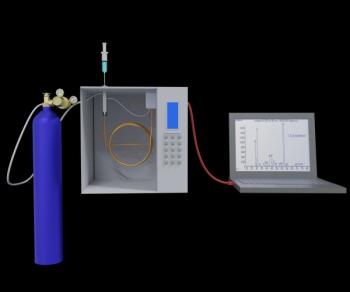
Compact instrumentation offers important advantages for many workflows, as illustrated by these examples.

LCGC North America
At the 43rd International Symposium on Capillary Chromatography (ISCC 2019) in Fort Worth, Texas, a panel addressed the current challenges and potential future directions in capillary liquid chromatography. How can their vision be achieved?

August 22nd 2025

August 6th 2024