The 11th International Symposium on Recent Advances in Food Analysis will be in Prague, Czech Republic from 5–8 November 2024.
Jana Pulkrabova is a professor of Food Chemistry and Analysis and a Head of the Department of Food Analysis and Nutrition at UCT Prague. Her research group studies groups of organic pollutants in food, internal and external environment, and human biological monitoring.

The 11th International Symposium on Recent Advances in Food Analysis will be in Prague, Czech Republic from 5–8 November 2024.

Scientists used supercritical fluid chromatography (SFC) and ultrahigh-pressure liquid chromatography (UHPLC)—both coupled with high-resolution mass spectrometry (HRMS)—to analyze various types of chlorinated paraffins (CPs) in fish oil-based dietary supplements.

This article presents SFC and UHPLC—both coupled with HRMS—methods for the analysis of short-, medium-, and long-chain CPs in fish oil-based dietary supplements.

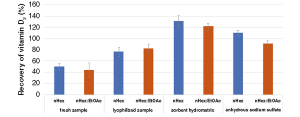
In our study, a fast and sensitive liquid chromatography coupled to tandem mass spectrometry (LC–MS/MS) method for the determination of vitamin D2 in fresh mushrooms and its metabolite 25(OH)D2 in the blood of volunteers regularly consuming UV-treated mushrooms has been introduced.

A simple LC–MS method has been developed and validated for the simultaneous determination of 18 synthetic food additives and caffeine in soft and energy drinks, and in various alcoholic beverages. Nine food colours (tartrazine, sunset yellow FCF, azorubine, ponceau 4R, allura red AC, patent blue V, brilliant blue FCF, green S, brilliant black BN), two preservatives (sorbic and benzoic acid) and seven sweeteners (acesulfame K, aspartame, cyclamic acid, saccharin, sucralose, neohesperidin DC, neotame) were targeted food additives. The method employs reversed-phase ultra-high performance liquid chromatography (UHPLC) for analyte separation and a single quadrupole mass spectrometer for their detection. The limits of quantification were low enough to enable a reliable control of maximum limits set for some additives (Regulation [EC] No. 1333/2008). The method was applied for analysis of a wide range of samples collected at a typical supermarket: 14 soft drinks, 19 energy drinks, and 43 alcoholic beverages.

Published: July 1st 2022 | Updated:

Published: October 1st 2022 | Updated:

Published: June 30th 2020 | Updated: