

This article provides a look at the new GC products that entered the market in 2022–2023.

Nicholas H. Snow is the Founding Endowed Professor in the Department of Chemistry and Biochemistry at Seton Hall University, and an Adjuncy Professor of Medical Science. During his 30 years as a chromatographer, he has published more than 70 refereed articles and book chapters and has given more than 200 presentations and short courses. He is interested in the fundamentals and applications of separation science, especially gas chromatography, sampling, and sample preparation for chemical analysis. His research group is very active, with ongoing projects using GC, GC-MS, two-dimensional GC, and extraction methods including headspace, liquid-liquid extraction, and solid-phase microextraction. Direct correspondence to: LCGCedit@mmhgroup.com
This article provides a look at the new GC products that entered the market in 2022–2023.

Pittcon 2023 revealed that gas chromatography (GC) still has a strong presence at in-person conferences and in literature.

Understanding the relationship between selectivity and retention is key to realizing excellent gas chromatographic separations.

What is the relationship between selectivity and resolution?

By reviewing the basic thermodynamics underlying GC separations, we see how it impacts retention and method development in GC analysis.

In this instalment, we review the basic thermodynamics underlying separation in GC, and we see how this impacts selectivity and retention.

The common measures of stationary phase polarity—McReynolds constants and the polarity scale—are not always accurate predictors of retentiveness or selectivity in GC.
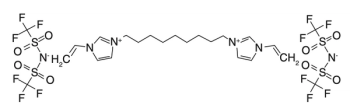
This instalment examines the idea of stationary phase polarity in detail. The assumptions inherent in the most popular stationary phase polarity-evaluating systems—McReynolds constants and the polarity scale—are discussed.

The ECD and its principles of operation are reviewed, and the general tradeoffs in detection between selectivity, ease of use, and sensitivity discussed.

The electron capture detector (ECD) for GC is still used relatively unmodified today. But using it effectively means understanding the tradeoffs between selectivity, ease of use, and sensitivity.

Key insights on how to get the most out of gas chromatography for the most difficult problem solving, the best quantitative analysis, and the highest data integrity.

We pass on valuable lessons shared by the six GC speakers at ChromTalks 2022.

Hidden uncertainties in quantitative methods may make data look more precise and accurate than they really are. Take particular care when using dilution, which can increase experimental uncertainty.

With the greater sensitivity, resolution, and advanced data handling capabilities now available comes a new set of experimental uncertainties.

Our annual review of new gas chromatography products.

“GC Connections” presents the column’s annual review of new developments in the field of gas chromatography made available in 2021–2022.

We review the processes that happen in the inlet when a sample is injected and use this to make some sense of the many available inlet liner configurations.

The glass inlet liner is one of the most important, yet least understood and most often ignored, components of a gas chromatographic experiment.

This month we discuss the consequences of the Golay theory, its relevance, and some alternatives.

When applying Golay’s equation for height equivalent of a theoretical plate (HETP) to capillary GC, you should ask three key questions.
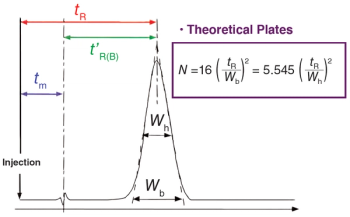
In this instalment we take a close look at Golay’s famous equation that most people see as relating HETP (height equivalent to a theoretical plate) to the carrier gas flow rate or average linear gas velocity in a capillary column.

We are all familiar with Golay’s equation relating to height equivalent to a theoretical plate (HETP) in GC. But do we understand it correctly?

How can we make our workflows more efficient, our detection limits lower, and our instruments cleaner?

Gas chromatographers may not have the latest equipment they need. Here, we give a list of tools and consumables that can help make workflows more efficient, detection limits lower, and GC instruments cleaner.

Professor Harold Monroe McNair, among the original icons of chromatography, passed away on 27 June 2021 at the age of 88. In this tribute to the remarkable man and using his works as a guide, we explore three fundamental areas of understanding in GC, seeing ideas about problems that still challenge gas chromatographers today.
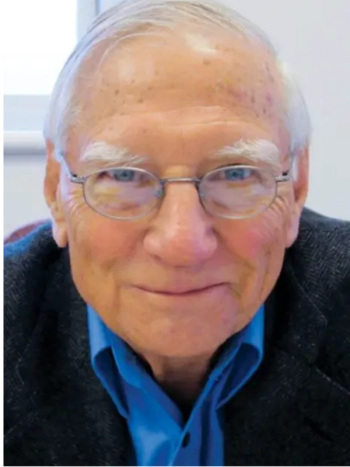
The late Harold McNair had a remarkable 60-year career as a chromatographer. He taught us many valuable lessons, three of which we discuss here.
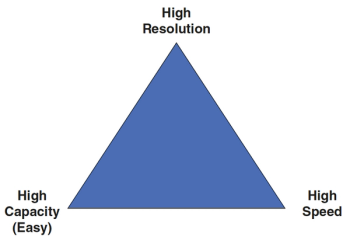
This column will examine simple steps that can be taken to optimize a separation without changing the column. Adjusting temperature, flow, and sampling with an eye towards the classical method optimization goals of high resolution, high speed, high sample capacity, and ease of use will be discussed.

How far can you get on optimizing a GC separation without changing the column? Pretty far, in fact.

The May 2021 ChromTalks, presented by LCGC and CHROMacademy, brought together 12 world-renowned chromatography experts discussing some of the most important lessons and experiences that shaped their careers. This month, we look back at ChromTalks and share the lessons learnt from these great speakers, with topics including sample preparation, GC, and GC–MS.

At ChromTalks, experienced speakers shared mistakes made during their careers.