Nicholas H. Snow

Nicholas H. Snow

Nicholas H. Snow is the Founding Endowed Professor in the Department of Chemistry and Biochemistry at Seton Hall University, and an Adjuncy Professor of Medical Science. During his 30 years as a chromatographer, he has published more than 70 refereed articles and book chapters and has given more than 200 presentations and short courses. He is interested in the fundamentals and applications of separation science, especially gas chromatography, sampling, and sample preparation for chemical analysis. His research group is very active, with ongoing projects using GC, GC-MS, two-dimensional GC, and extraction methods including headspace, liquid-liquid extraction, and solid-phase microextraction. Direct correspondence to: LCGCedit@mmhgroup.com


Articles by Nicholas H. Snow

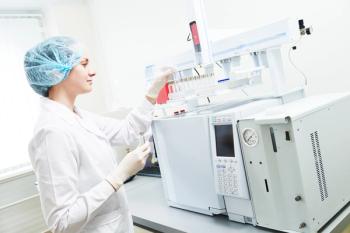
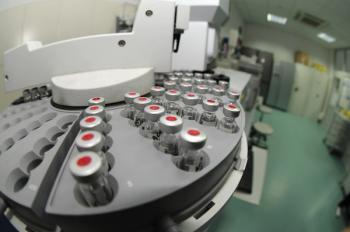
A gas chromatography laboratory with equipment in operation. Generated by AI. | Image Credit: © Nim - stock.adobe.com.

In Part II of our exploration of splitless injection, we will see that it is a surprisingly complex process, and that it is difficult to understand because we cannot see what is happening during the injection process. For this discussion, we will think of the injection process as beginning with the syringe plunger being depressed and ending with the start of a temperature program in the column oven. In most splitless injections, this process requires 30 s to 1 min. There are several band broadening and focusing mechanisms that affect the peak shapes, widths, and heights resulting from splitless injection.

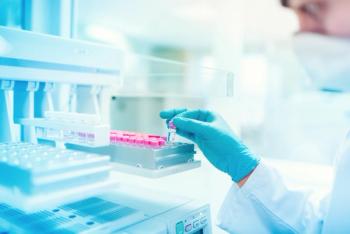
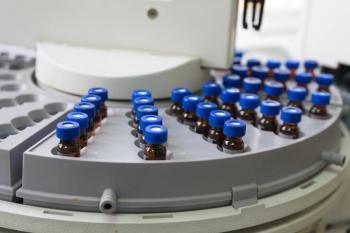
Top view of vials are arranged in the auto sampler for GC chromatography in laboratory with microscope testing background | Image Credit: © Anchalee - stock.adobe.com.

In this installment, we examine several of the common parameters that can affect automated peak integration and the resulting peak areas. We will consider how the data system detects the beginning and end of the peak, how it determines the peak maximum, how real peaks are differentiated from noise, and how signals at individual time intervals are summed to generate the peak area.

Nicholas H. Snow

Gas chromatography is a premier technique for quantitative analysis. As gas chromatographs have become simpler to use and data systems more powerful, much of the data processing involved in delivering quantitative results now happens in the background and is seemingly invisible to the user. In this installment, we will review the calibration techniques used with gas chromatography. We will compare calibration methods and the assumptions that underlie them. We will explore common mistakes and challenges in developing quantitative methods and conclude with recommendations for appropriate calibration methods for quantitative problems.

Latest Updated Articles