

The Column-12-05-2017
The Column
Peak Scientific has created a new online calculation tool to help laboratories that use gas chromatography (GC) to quickly identify the ideal gas solution for their specific GC instrument.

The Column
The American Chemical Society has awarded Kevin Schug with the J. Calvin Giddings Award for Excellence in Education in recognition of his efforts to improve the educational experience of students in the field of analytical chemistry.

The Column
Dwight Stoll has been awarded the EAS Young Investigator Award at the recent Eastern Analytical Symposium held in Plainsboro, New Jersey on 15th November.

The Column
Sciex Diagnostics, the in vitro diagnostics (IVD) division of Sciex, has announced a joint venture with Zhejiang Dian Diagnostics (Dian).

The Column
The refractive index (RI) detector is the most common detector in gel permeation chromatography/size-exclusion chromatography (GPC/SEC). The advantage of this universal detector is that it detects everything; the disadvantage is that it detects everything. This instalment of “Tips & Tricks” offers some advice when working with RI detectors.

The Column
Multidimensional chromatography, or comprehensive chromatography, is a well-established technique for the analysis of complex mixtures. However, the technique is often perceived as highly complex and difficult to put into practice for routine applications. Nonetheless, the technique provides exceptional potential for addressing challenging separations. The addition of a dilution factor allows multidimensional chromatography to provide a high level of flexibility and selectivity. The dilution effect is achieved by using a column chemistry format compatible with large flow rates, which now offers the option of large volume injection without volume or mass overload issues. This novel solution can reduce or eliminate the need to add a solvent exchange step, such as evaporation or reconstitution, which significantly reduces the most time-consuming part of the sample preparation process.
The Column
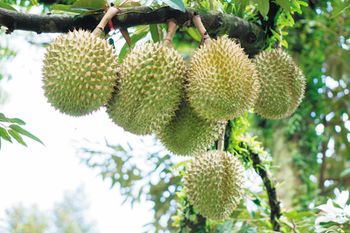
The durian fruit is notorious for its unpalatable aroma, and yet the fruit is incredibly popular throughout Southeast Asia and amongst travellers. Holding the title of “the world’s smelliest fruit” attracts attention including that of Martin Steinhaus from the Aroma Research Group at the Deutsche Forschungsanstalt für Lebensmittelchemie (German Research Center for Food Chemistry). He spoke to The Column about his group’s research into the compounds responsible for the fruit’s uniquely unpleasant aroma.

The Column
A preview of HTC-15, which will be held at Cardiff City Hall, Cardiff, United Kingdom, from 24–26 January 2018.
The Column
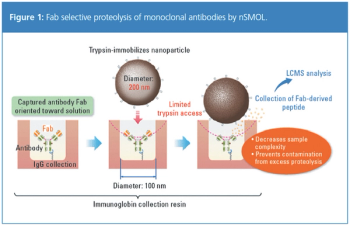
The application of a novel approach that enables a selective proteolysis of the Fab region of monoclonal antibodies (mAbs) is described. The technique is called nano-surface and molecular-orientation limited (nSMOL) proteolysis. By restricting the proteolysis to the complementarity-determining region (CDR) of the mAb, there is considerable reduction in sample complexity and the time required for method set-up and optimization.
The Column
Click the title above to open The Column December 05, 2017 Europe & Asia issue, Volume 13, Number 17, in an interactive PDF format.
The Column
Click the title above to open The Column December 05, 2017 North American issue, Volume 13, Number 17, in an interactive PDF format.
Advertisement
Advertisement
Trending on LCGC International
1
Prioritizing Unknowns in Nontarget Screening of Food Samples
2
Jan Christensen on Quantitative Non-Targeted Screening
3
Conversations with Michael Dong: Overcoming Challenges with Reversed-Phase Chromatography in Drug Analysis
4
The Future of GLP-1 Peptide Analysis: AI, Automation, and the Scientist's Role
5