

It’s time to take the lid off the black box and take a closer look inside electronic pneumatic controller (EPC) devices.
It’s time to take the lid off the black box and take a closer look inside electronic pneumatic controller (EPC) devices.

This month we interview Jelle De Vos, Senior Postdoctoral Researcher at the Department of Chemical Engineering, Vrije Universiteit Brussel, Belgium, about his recent work to develop a chromatographic method to characterize nucleocapsid proteins from SARS-CoV-2, and the development of spatial three‑dimensional liquid chromatography (3D-LC) as a separation concept.

HTC-17 will be held in person from 26 to 28 January 2022, at Conference Center Het Pand in Ghent, Belgium. Here’s a taste of what to expect.

The identification and quantification of sulphur are real analytical challenges, demanding selective and sensitive methods. Analysis of products such as beer, wine, coffee, and vegetables are discussed.
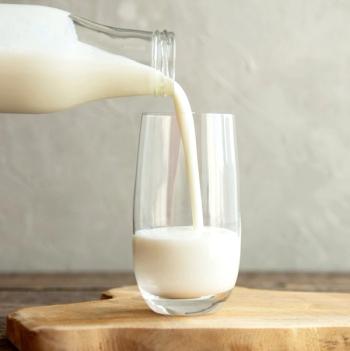
The Column spoke to Irma Bongers from Wageningen Food Safety Research (WFSR) in The Netherlands, about a recent research project to analyze prohibited pharmaceutical active substances (PPAS) in milk.

This instalment of Tips & Tricks focuses on whether a complete separation can be achieved using GPC/SEC and, if so, under what conditions.

Markes International moved its entire Welsh operations in March this year to relocate from Llantrisant to a newly refurbished site in Bridgend, which is twice as large as its former premises.

Lipidomics researchers from Örebro University have developed a method to analyze levels of per- and polyfluoroalkyl substances (PFAS) in human breast milk using UHPLC–QTOF-MS.

Click the link above to open The Column November 2021 North American issue, Volume 17, Number 11, in an interactive PDF format.
Click the link above to open The Column November 2021 Europe & Asia issue, Volume 17, Number 11, in an interactive PDF format.