

This instalment of Tips & Tricks focuses on whether a complete separation can be achieved using GPC/SEC and, if so, under what conditions.
This instalment of Tips & Tricks focuses on whether a complete separation can be achieved using GPC/SEC and, if so, under what conditions.

The Column
The “greenest solution” is certainly using no solvent but gel permeation chromatography/size-exclusion chromatography (GPC/SEC) as a liquid chromatography (LC) technique requires the use of a mobile phase. The growing awareness of the need for more sustainable (greener) solutions has focused attention on environmentally- and health-friendly solvents and solutions.
The Column
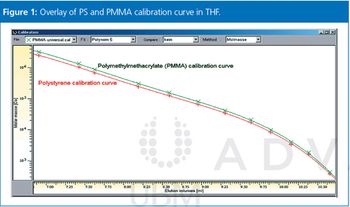
Polystyrenes (PS) are the most commonly used reference standards in gel permeation chromatography/size-exclusion chromatography (GPC/SEC) for nearly all organic GPC/SEC separations including high temperature GPC and pullulan or dextran for aqueous GPC/SEC. The majority of users rely on these standards for reproducible results. However, there is potential for improvements and this instalment of Tips & Tricks will discuss some general points that should be considered when determining calibration standards.

The Column
Tetrahydrofuran (THF) - a widely used solvent in gel permeation chromatography/size-exclusion chromatography (GPC/SEC) - is set to be classified as carcinogenic as proposed by the Committee for Risk Assessment (RAC). Analytical laboratories therefore need to find ways to reduce THF solvent use and waste, far beyond the demands of green chemistry. This instalment of Tips & Tricks presents different strategies to meet this goal.

August 7th 2015

December 1st 2015

December 10th 2019
