
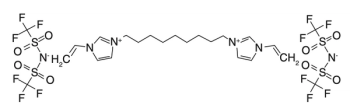
This instalment examines the idea of stationary phase polarity in detail. The assumptions inherent in the most popular stationary phase polarity-evaluating systems—McReynolds constants and the polarity scale—are discussed.
This instalment examines the idea of stationary phase polarity in detail. The assumptions inherent in the most popular stationary phase polarity-evaluating systems—McReynolds constants and the polarity scale—are discussed.

Online monitoring of odour and taste components that occur at parts-per-trillion (ppt) levels in industrial process waters requires specialized analytical hardware that is generally not compatible with the harsh environmental conditions in these typical industrial settings. An alternative instrumental method is proposed that uses dynamic extraction in combination with gas chromatography (GC) equipped with a simple flame ionization detector (FID) to achieve these extremely low detection limits.

Anneli Kruve and Pilleriin Peets from Stockholm University in Sweden, discuss their latest research in machine learning and nontargeted liquid chromatography–mass spectrometry (LC–MS) to assess ecotoxicity.

These questions tend to focus on dealing with octanol-water partition coefficients, as well as more practical applications of sample preparation.
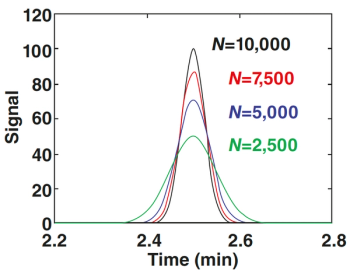
Developing a short list of the likely causes of these results can help streamline our troubleshooting experience when sensitivity-related problems occur.

The 51st International Symposium on High Performance Liquid Phase Separations and Related Techniques (HPLC 2023) will be held at the Congress Center Düsseldorf (CCD) in Germany, from 18–22 June 2023.