

As we celebrate the 40th year of LCGC, we are thinking not about the past, but about the future.
As we celebrate the 40th year of LCGC, we are thinking not about the past, but about the future.

Knowing the likely causes of baseline-related problems will help you solve them.

An overview of modern approaches to small-molecule drug discovery.

Better sample preparation and miniaturized separations are enhancing these analyses.

Is the informing power of separation science without limits?

In honor of LCGC’s 40th year, we asked leading chromatographers to share their perspectives on current challenges and their visions for the future, looking at fundamentals of the techniques as well as the impact of analytical developments in important areas like medical research, pharmaceutical development, and environmental studies. Here’s what they said.

Sample preparation and analysis of pharmaceuticals in wastewater present unique challenges. Here, we describe those challenges.

The recruitment of young, talented entrepreneurs within academia and industry is needed to tackle many of the challenges that exist today and that will emerge tomorrow.

Small metabolic molecules often are chiral and can play important roles in regulating a variety of biological functions, occasionally providing information about the presence and progression of disease.

Having a mixed-mode column that can provide both achiral and chiral resolution in one-dimension (1D) would significantly improve impurity profile understanding and reduce testing workload.
Although smaller advances have been made in the past decades, the question remains whether further extending operating pressure and decreasing particle size remains a feasible approach, or whether drastically novel approaches are required.

The fundamental mechanisms of band broadening are usually introduced to students through the van Deemter equation. Dimensional analysis of this equation can give physical meaning to the equation coefficients and enhance our understanding relative to qualitative descriptions. This approach can also guide improvements to future liquid chromatography (LC) column designs.

This article provides an overview of the development and current status of comparative analysis for GC×GC–TOF-MS data and how key limitations can be overcome with a novel tile-based pairwise analysis method.
The lack of proper method validation has important implications in blood alcohol concentration (BAC) determinations. We examine this issue, addressing the importance of gas chromatography (GC) for BAC determination, why certain validation procedures are important, and why accreditation bodies need to step up their game.

Further miniaturization of separations will greatly extend the reach of single-cell proteomics, metabolomics, and lipidomics, but key challenges in instrumentation, column technology, and ionization sources must be addressed.

Given that sample preparation consumes over two thirds of analysis time, sample preparation becomes the bottleneck issue in analytical chemistry, resulting in the urgent necessity of developing accelerated sample preparation techniques.

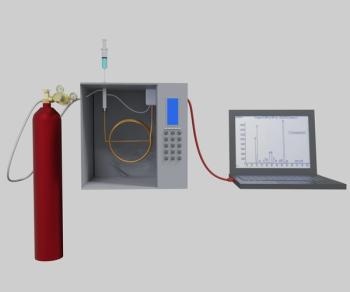
We might well ask “Where is gas chromatography (GC) heading?” For many analysts, the answer may be just “more of the same,” reflecting that GC is mature and that most analysis tasks and sample types have been tried and tested. In this scenario, any changes to the basic method may be marginal—sample introduction, and maybe a new detector? But beneath this status quo is an undercurrent of passion, excitement, and power.

In this article, I share my perspective on the trends in 2D-LC, and the developments we are likely to see in the field in the near future.

This paper provides an overview of some current and emerging physicochemical analytical challenges associated with these sophisticated drug systems and some of the technical advances needed in chromatographic systems to enable their design, development, and manufacture.

Headspace GC reveals that sonication can degrade common organic solvents.