LCGC North America-08-01-2015

McDowall-figures-5_web.jpg

LCGC North America

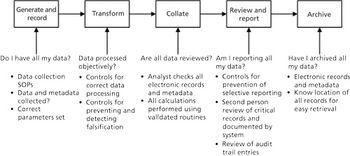
This is the first of a four part series looking at what functions and features the authors believe should be in a future chromatography data system (CDS) working within a regulated analytical laboratory. The first part of this series is aimed at setting the scene of where and how a CDS fits within the laboratory operation. In using the term CDS, in the future, this can refer to either a traditional CDS that is familiar to readers or the CDS functions could form part of another informatics solution such as Electronic Laboratory Notebook (ELN) or Laboratory information Management System (LIMS). In the next three parts we make 15 recommendations for improvements to the system architecture, the requirements for electronic working and regulatory compliance.


Table1-Web.jpg

LCGC North America

This installment provides an overview of high-throughput characterization techniques of drug leads to support small molecule drug discovery programs in a pharmaceutical company. A myriad of analytical chemistry techniques including separation science methodologies are used to confirm the structures and identities, quantitating the concentrations of stock solutions, and measuring key physicochemical properties of the new chemical entities (NCE). A case study is used here to illustrate the details of these applications in high-throughput characterization.

Figure-1_web.jpg

LCGC North America

Recently, Nature and Science Citation Index listed the 100 most cited research papers of all time. Two of these are the classic Bligh-Dyer and Folch lipid extraction methods from the late 1950s. This month we will take a look at the lasting impact of these papers and explore the current state of lipid extractions, including lipidomics.
