

A high-throughput workflow for wide-targeted metabolomics in dried blood spots (DBS) is presented.
A high-throughput workflow for wide-targeted metabolomics in dried blood spots (DBS) is presented.

An investigation into whether 3D-printed sorbent devices introduce background contaminants in untargeted LC–QTOF-MS analyses.
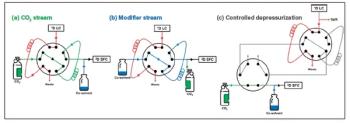
This study delves into the challenges of online coupling, offering solutions to overcome peak distortion and enhance reliability in complex sample analysis. The resulting LC×SFC–MS/MS analysis allows differentiation of isomers in very complex samples, regardless of similar fragmentation patterns.

This article explores the use of chromatographic retention measurements in both LC and SFC to develop quantitative retention activity relationship (QRAR) models, offering a predictive tool for skin permeability without animal testing.

An innovative workflow that combines iterative data-dependent acquisition (DDA) and data-independent acquisition (DIA) to enhance the identification of unknown pollutants in urban runoff is presented.

This article describes the analytical challenges of chemical exposomics in food safety. The need for high-throughput, multi-platform approaches—such as LC–HRMS and GC–HRMS with IMS—to capture the full spectrum of potential contaminants in our food supply is emphasized.

Gert Desmet details the technical articles in this special supplement, featuring keynote speakers from HPLC 2025.