

E-Separation Solutions
Pittcon Theater continues on today at 10:00 a.m. with a focus on hyphenated techniques.
E-Separation Solutions
Pittcon Theater continues on today at 10:00 a.m. with a focus on hyphenated techniques.
E-Separation Solutions
This Tuesday morning workshop will feature several discussions involving LC?MS-MS that will be of interest to our readers.
E-Separation Solutions
The 2011 Chromatography Forum of the Delaware Valley Dal Nogare Award will be presented to Janusz Pawliszyn, Professor of Chemistry at the University of Waterloo (Waterloo, Ontario, Canada), on Monday morning at Pittcon 2011.
E-Separation Solutions
Welcome to the opening day of LCGC?s coverage of Pittcon 2011 from the Georgia World Congress Center in Atlanta, Georgia.
E-Separation Solutions
Welcome to Day 2 of LCGC?s coverage of Pittcon 2011. Today, we present the 2011 Emerging Leader Award as part of our live theater, in booth #3217, at 10:00 a.m.
E-Separation Solutions
At 10:30 a.m. today James W. Jorgenson, William Rand Kenan Jr, Distinguished Professor in the Department of Chemistry at the University of North Carolina and winner of the LCGC Lifetime Achievement Award will be interviewed by Laura Bush, editorial director of LCGC North America and Spectroscopy, on his illustrious career in chromatography.
E-Separation Solutions
Welcome to Day 3 of LCGC?s coverage of Pittcon 2011. Today, we present the 2011 LCGC Lifetime Achievement Award as part of our live theater, in booth #3217, at 10:30 a.m.
E-Separation Solutions
This morning LCGC North America and LCGC Europe will begin the 2011 Pittcon Theater sessions.
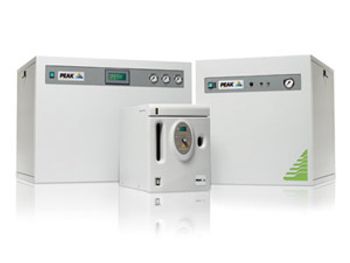
Peak Scientific Product Profile
The venue for analytica Anacon India will change this year, from Hyderabad to Mumbai.

Spark Holland Product Profile
E-Separation Solutions
LCGC and Spectroscopy, in conjunction with Pittcon, will be presenting LIVE video interviews at Pittcon 2011 in Atlanta, GA, on March 14 and 15. Interviews with leading researchers and industry experts will cover trends and applications in the fields of chromatography and spectroscopy. On March 16, join us for interactive CHROMacademy demonstrations and discussions.
The Column
Thermo Fisher Scientific has announced the initial findings of stroke research conducted by its Biomarker Research Initiatives in Mass Spectrometry (BRIMS) centre in collaboration with Massachusetts General Hospital (MGH), Harvard University. According to the company, the research provides potentially significant insight into patent foramen ovale (PFO) and its connection with strokes.
Leading provider of analytical light scattering instrumentation awarded Tibbetts Award by the U.S. Small Business Administration.
The UK's Institute of Cancer Research is collaborating with scientists at AB SCIEX to standardize advanced methods of mass spectrometry-based tissue imaging.
Using liquid chromatography-tandem mass spectrometry (LC-MS-MS) to examine the role of quorum sensing on an endophytic strain of Serratia.

LCGC Asia Pacific
This month's column examines important aspects of solvent selection and how this affects selectivity.
LCGC Asia Pacific
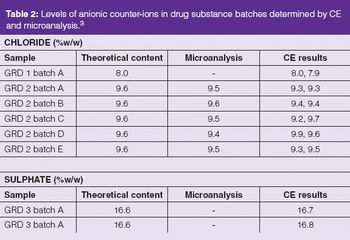
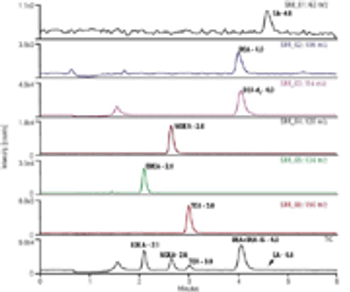
Capillary Electrophoresis is useful for analysing simple inorganic anions in forensic, clinical and pharmaceutical applications.
LCGC Asia Pacific
Waters Application Note
LCGC Asia Pacific
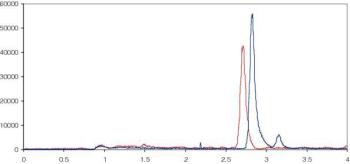
If the art of method development is dying what can we do about it?
LCGC Asia Pacific
Spark Holland Application Note

LCGC Europe
A new series on valves and the pivotal role they play in gas chromatography.

The Application Notebook
Dionex Application note
The Column
Thermo Fisher Scientific has launched a YouTube channel dedicated to chromatography videos. The first two videos uploaded provide educational information on the mechanics of GC and sample preparation.
Special Issues
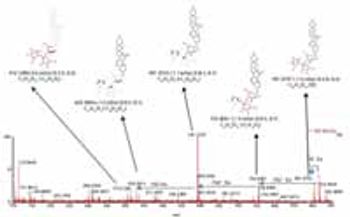
Most plants used in traditional Chinese medicine must be processed before their medicinal usage; hence the effective ingredients may differ from those in the freshly harvested plant extracts. In this work, we present a fast and generic approach using sub-2-?m liquid chromatography–time-of-flight–mass spectrometry (sub-2-?m-LC–TOF-MS) coupled with multivariate statistical data analysis to systematically profile ingredient changes between fresh and processed samples of huang jing.

Special Issues
The inclusion of time-resolved selected reaction monitoring (SRM) functionalities into mass spectrometer control software allows large numbers of peptides to be quantified using short LC–MS-MS methods.

Special Issues
The metabolomics workflow described here combines untargeted (discovery) quadrupole time-of-flight (Q-TOF) liquid chromatography–mass spectrometry (LC–MS), targeted (confirmation) triple-quadrupole LC–MS-MS, and sophisticated data mining as an effective means to elucidate metabolite changes.

Special Issues
Increases in vitamin D testing frequency have required more rapid and cost-effective solutions for determining vitamin D levels in plasma. This LC–MS method was adapted for use with core-shell columns to achieve run times of less than 4 min.