

E-Separation Solutions
Click here to view the complete e-Separation Solutions newsletter from May 5, 2011.
E-Separation Solutions
Click here to view the complete e-Separation Solutions newsletter from May 5, 2011.
Peak Scientific Instruments, Scottish manufacturer of nitrogen, hydrogen and air generators has been awarded the Queen?s Award for Enterprise 2011.
Phenomenex EU - A Simple Method for Analyzing Aggregates of EPO (Erythropoietin) Using a BioSep?-SEC-s2000 GFC Column (TN-1101)
Phenomenex expands international subsidiary network with new office in southeastern India.
Dionex has partnered with Genevac to reduce solvent use in sample preparation. The result is the release of Genevac?s Rocket evaporator.
The Chromatography Forum of the Delaware Valley is currently seeking nominations for the 2013 Dal Nogare Award.

LCGC North America
Nanomaterials offer exciting possibilities for improving separations with techniques such as TLC, SPME, and CE.

Special Issues
A preview of the this year's ASMS Conference, taking place June 5–9 in Denver, Colorado.

Special Issues
Gas chromatography combined with atmospheric-pressure chemical ionization (APCI) was used to analyze high-molecular-weight phthalates.
Special Issues
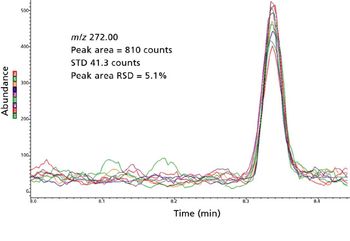
Signal-to-noise of a chromatographic peak from a single measurement has been used determine the performance of two different MS systems, but this parameter can no longer be universally applied and often fails to provide meaningful estimates of the instrument detection limits (IDL).
Special Issues
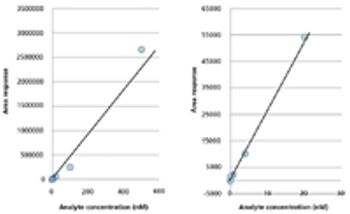
The impact of speed of analysis and selectivity to the depth of coverage and accuracy of the analyses are discussed.

Special Issues
A single calibration curve run with staggered calibrants bracketing the unknowns is compared to running complete duplicate calibration curves, one at the beginning and one at the end of unknown sample analysis in an effort to accelerate discovery bioanalysis.


Special Issues
A newly developed high-throughput method for the quantitation of vitamin D using both multiplexed LC and on-line SPE is discussed.
LCGC North America
Click the title above to open the LCGC North America May 2011 regular issue, Vol 29 No 5, in an interactive PDF format.
Special Issues
Click the title above to open the May 2011 issue of Current Trends in Mass Spectrometry, Volume 9, Number 2, in an interactive PDF format.

The Column
Flavour analysis of a Bloody Mary has provided some key insights into the best ways to mix the drink. The challenges and findings of cocktail?s analysis were presented at the 241st National Meeting & Exposition of the American Chemical Society.
Investigating a more effective alternative to current hepatitis C treatment therapy, scientists have studied the effects of Silybum marianum (milk thistle) seeds on the hepatitis C virus (HCV) 3a core gene.
Magellan Biosciences has announced an agreement with Bruker to deliver microbial identification from cultures using Bruker MALDI-TOF proteomic fingerprinting, along with Magellan?s TREK-brand susceptibility tests to clinical, research and veterinary laboratory customers.
Actinomycetes in soil produce various antifungal compounds that may protect crops from anthracnose disease.
Scientists have used stepwise weak anion exchange (WAX) chromatography to fractionate the urine proteome and to enrich low-abundance proteins that are often obscured by high-abundance proteins.
The analytical spectrometry research group at the University of Oviedo in Asturias, Spain has implemented the Thermo Scientific XSERIES 2 ICP-MS to perform interference-free sulphur detection in proteins.
Bruker completes acquisition of Michrom and moves Chemical & Applied Markets division to Fremont, California.
E-Separation Solutions
Click here to view the complete e-Separation Solutions newsletter from April 21, 2011.

LCGC Europe eNews
Joining us for a discussion on hyphenated techniques are Ian Jardine from Thermo Fisher Scientific, Massimo Santoro from PerkinElmer and Jürgen Wendt from Leco.
The European patent office has granted a patent entitled ?Proteome-wide quantification of small molecule binding to cellular target proteins? to German company, KINAXO Biotechnologies.
The Column
NASA has selected ITT Analytics' OI Analytical total organic carbon analyser to measure water quality on board the International Space Station. A conductivity temperature meter from the company will also be used.
E-Separation Solutions
What are the latest trends in hyphenated techniques and what benefits do they offer? We asked Ian Jardine, Thermo Fisher Scientific; Massimo Santoro, Perkin Elmer; and Jürgen Wendt, Leco.
E-Separation Solutions
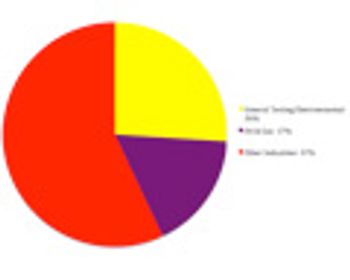
The three main types of volatile extraction techniques are purge & trap, headspace, and thermal desorption equipment.
Dionex NA - Measurement of siRNA Cell-Penetrating Peptides