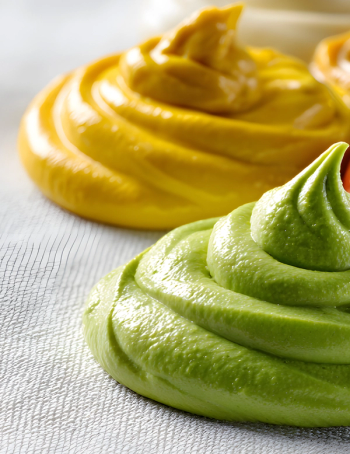
Gas chromatography–mass spectrometry (GC–MS) and ion chromatography profile wasabi and mustard heat and acidity.
Agilent product profile
Agilent CrossLab is the new, fast growing portfolio from Agilent Technologies, supplying chromatography instrument supplies, for your Non-Agilent instruments.
Agilent CrossLab supplies are manufactured specifically to perform seamlessly, with the variety of analytical instruments in your lab, including GCs from former Varian, Bruker, PerkinElmer, Shimadzu, and Thermo Scientific.
You’ll find the same outstanding quality, you expect from Agilent Technologies, with Agilent CrossLab autosampler vials, caps, septa and inserts.
Visit us at
Agilent CrossLab Ultra Inert Liner deactivation process, developed for high sensitivity analysis, provides extreme surface inertness – even for liners containing glass wool.
Ultra Inert chemistry was developed using a suite of tests specifically designed to stress, then evaluate liner activity, resulting in liners featuring:
• Reproducibility - highest level and consistent inertness for active compounds such as acids and bases
• Robustness - tested with a sequence of 100 injections of Endrin/DDT with
• Reliability - lot-tested for inertness to ensure consistent and efficient deactivation using both acidic and basic probes at trace level (2ng) on column, with low to no bleed or background contamination
Request your FREE Ultra Inert Liner here
To view the entire Agilent CrossLab portfolio