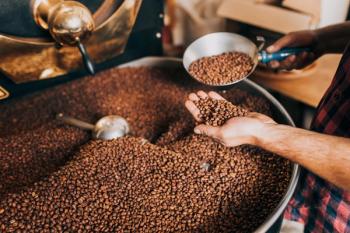
Gas chromatography (GC) tests show spoilage yeasts alter flavor and raise alcohol in NoLo beer.
Top articles published this week include an article recapping the 2025 Eastern Analytical Symposium Young Investigator Award recipient Katelynn Perrault Uptmor’s talk and an article highlighting recent research from Purdue University about nitrosamine formation in drugs.
This past week, LCGC International published a variety of articles on hot topics in separation science. Katelynn Perrault Uptmor, recipient of the 2025 EAS Young Investigator Award and LCGC International’s Emerging Leader in Chromatography, discusses her work using non-targeted analysis to characterize complex chemical mixtures, and we also reported on a couple studies from Purdue University and Fairleigh Dickinson University.
This is the Best of the Week.
Katelynn Perrault Uptmor, recipient of the 2025 EAS Young Investigator Award and LCGC International’s Emerging Leader in Chromatography, is advancing the field of comprehensive two-dimensional gas chromatography (GC×GC) while advocating for clearer science communication. Her research uses non-targeted analysis to characterize complex chemical mixtures, with applications ranging from forensic recovery and decomposition odor profiling to food authenticity and environmental monitoring (1). Beyond technical innovation, she promotes accessibility through open-access workflows and hands-on undergraduate training. Perrault Uptmor aims to lower barriers to GC×GC adoption by emphasizing its efficiency, analytical power, and sustainability, positioning multidimensional chromatography for broader real-world impact (1).
At the EAS Conference this past week, researchers from Purdue University discussed how crystal defects in drugs can accelerate nitrosamine formation, even without traditional catalysts, which poses a significant degradation risk. In their research, the team found that crystalline quality, not particle size, governs nitrosamine formation, highlighting the importance of defect density (2). They also discussed how slow-growth crystallization techniques and controlled storage atmospheres may reduce nitrosamine risk by minimizing crystal defects (2). Ultimately, this research suggests a shift in nitrosamine risk assessment towards focusing on crystalline microstructure and defect density in drug manufacturing.
Robert “Chip” Cody reflects on a career defined by cumulative innovation in mass spectrometry, from pioneering trapped-ion MSⁿ experiments to co-inventing the DART ion source. He discusses the evolution of chromatography–MS interfaces, the growing robustness of modern systems, and the complementary role of ambient ionization alongside GC–MS and GC×GC–MS (3). Cody explains trade-offs between resolution, speed, and robustness across TOF, quadrupole, and MS/MS systems, emphasizing application-driven selection (3). Looking ahead, he sees software-driven insights, GC×GC, ion mobility, and multidimensional separations as major frontiers, stressing that no single analytical technique can solve every problem.
Researchers at Fairleigh Dickinson University used a bare silica column and a quantitative assessment methodology to clarify how nucleosides are retained in HILIC. By separating the contributions of partitioning, adsorption, and electrostatic interactions, the team showed that the dominant retention mechanism shifts with ammonium acetate concentration (4). Their approach allows direct measurement of partitioning coefficients for both neutral and ionized compounds, overcoming limitations of traditional log P measurements (4). The findings suggest that method development can be guided by tuning salt concentration and understanding phase ratio effects, offering practical strategies for resolving complex mixtures of native and modified nucleosides (4).
Restek President Bill Arrowsmith reflects on the company’s 40-year journey from a small Pennsylvania incubator to a global, 100% employee-owned leader in GC and LC technologies. He credits Restek’s success to a culture of ownership that empowers employees to innovate, act decisively, and stay closely connected to customer needs across eight countries (5). Looking ahead to Restek’s 50th anniversary, Arrowsmith envisions continued global growth driven by investment in people, technology, and culture (5). With customers facing staffing shortages, sustainability pressures, and increasing analytical demands, Restek aims to simplify complex workflows and deliver reliable, efficient solutions that make laboratory work easier and more impactful.