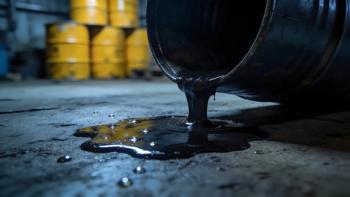
Quantitative non-targeted screening with predicted response factors is not for regulation, but can rank environmental chemicals by concentration and toxicity.
This week, LCGC International published a variety of articles on hot topics in separation science. From our upcoming forensic science content series to a new interview on preanalytical factors to consider before testing for ethanol in human waste, we’re covering all of the latest news and information in chromatography. Below, we’ve highlighted some of the most popular articles that were published this week.
Will Wetzel
Forensic science is a multidisciplinary field that applies scientific principles and analytical techniques to investigate crimes and uncover the truth behind criminal activity. Among the many tools used in forensic investigations, chromatography stands out as a powerful method for separating, identifying, and quantifying chemical substances within complex mixtures. LCGC International is excited to announce that on September 15th, during National Forensic Science Week, we will be releasing a one-day online content series titled, “From Sample to Verdict.”
Aaron Acevedo
Forensic science is used for a variety of purposes from enforcing criminal law to protecting public health. It is now standard practice to use advanced forensic techniques, such as fingerprinting, DNA testing, and more, when assessing physical crime scenes. These techniques are improving how crimes are solved in the field. Maria Olds of the University of Texas at Arlington is one of these researchers. In part one of our interview with Olds, she discusses the importance of this research, alongside why using headspace (HS) gas chromatography (GC) with a flame ionization detector (FID) the preferred method of ethanol analysis in human blood and urine.
John Chasse
A team of researchers representing the Chinese Academy of Agricultural Sciences, Huazhong Agricultural University, and Xinyang Agriculture and Forestry University investigated the effect of hydrogen carbonate (HCO3−) on the aroma quality of green tea through a combined approach of sensory evaluation, headspace solid-phase microextraction, and gas chromatography-mass spectrometry (GC-MS) techniques. The findings will provide a basis for selecting ion indicators in water used for brewing tea as well as create a theoretical foundation for further in-depth studies on the mechanism of how brewing water affects the release of aroma in tea infusion.
John Chasse
Researchers at Tshwane University of Technology (Pretoria, South Africa) investigated the potential of M. tortuosum extracts and the M. tortuosum extract Zembrin, to alleviate Parkinson’s disease (PD) deficits in zebrafish larvae. Their research assessed locomotion, reactive oxygen species, and total glutathione content. Using ultra-performance liquid chromatography coupled to mass spectrometry (UPLC-MS), researchers characterized the mesembrine alkaloid profiles in the extracts and Zembrin, which are known for their sedative, anxiolytic, and antidepressant properties.
Aaron Acevedo
Bioactive compounds extracted from plants can enhance human health, reduce the risk of disease, and serve as suitable sources for identifying new drugs. Plant foods encompass a large variety of compounds, which are called secondary metabolites. Due to the complex matrices of foods, the qualitative and quantitative analysis of metabolites in plant foods requires a prior separation step. To develop automated tools for rapid compound identification, prior knowledge of retention times (RTs) has been deemed a valid support to MS data to reduce the number of potential candidate structures. However, experimental determination of retention times is not always feasible for a large number of compounds. As such, alternative methods, such as quantitative structure-retention relationships (QSRRs), are being used to fill data gaps by predicting metabolites’ chromatographic retention behavior. University of Kurdistan and University of Milano-Bicocca researchers developed original quantitative structure-retention relationship (QSRR) models to predict the retention times of plant food bioactive compounds.