

News|Videos|April 3, 2026
Chemometrics and AI Approaches in Food Authenticity Testing
Advertisement
Episodes in this series



Machine learning and artificial intelligence (AI)-driven data analysis tools have generated considerable excitement in the food authenticity field, offering the prospect of identifying subtle patterns across large and complex data sets that would be beyond the reach of conventional statistical approaches. The panel assess where these tools are genuinely adding value—for instance in building robust spectral libraries, identifying outliers in large compositional data sets, or streamlining the interpretation of non-targeted screening results—and where enthusiasm may be running ahead of scientific rigor. A central theme of the discussion is the risk of deploying powerful computational tools without an adequate foundation of chemical knowledge and domain expertise: models that are technically sophisticated but chemically uninformed can produce results that appear compelling but lack scientific validity or real-world reliability. The panel reflect on what responsible, well-grounded integration of AI and chemometrics into food fraud detection looks like, and what safeguards should be in place.
Deborah McKenzie, Deputy Assistant Executive Director and Chief Standards Officer at AOAC INTERNATIONAL, USA, moderates this illuminating discussion with leading experts adept at using separation science in food authenticity and food fraud applications; Chris Elliott, Founder of the Institute for Global Food Security (IGFS) at Queen’s University Belfast, Northern Ireland, UK, and Professor of Food Security at Thammasat University, Thailand; Michele Suman, Food Safety & Authenticity Research Manager, Barilla Analytical Food Science, Italy, and Adjunct Professor of AgriFood Authenticity, Catholic University Sacred Heart; and Nicholas Birse, Lecturer in Mass Spectrometry, Queen’s University Belfast, Northern Ireland, UK and a Researcher at the Institute for Global Food Security (IGFS), Northern Ireland, UK.
Advertisement
Related to this article

Laura Righetti explains why quantification, not instrumentation, still keeps mass spectrometry imaging (MSI) out of routine food safety testing.

Anneli Kruve reports that toxicity predictions from MS2-derived molecular fingerprints outperform spectral-similarity methods in nontarget screening of food.
In this eighth part of " Conversations with Michael Dong," a series on fundamentals of HPLC in pharmaceutical analysis, LCGC International’s "Perspectives in HPLC" column editor discusses why ultraviolet detection dominates pharmaceutical analysis and quality control.

High-performance liquid chromatography–tandem mass spectrometry (HPLC-MS/MS) was used in a reverse triiodothyronine (rT3) test to separate canine hypothyroidism from illness.
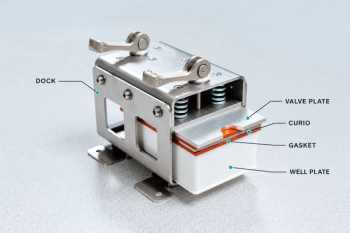
Quantera Analytical’s Terry Bates discusses parallel headspace extraction for gas chromatography-mass spectrometry (GC–MS) and direct analysis in real time–mass spectrometry (DART–MS) analysis.

Amandaa Brewer warns a shortage of large-molecule chromatography experts, as practitioners retire, could leave the next generation without the fundamentals.

Christopher Chouinard of Clemson University discusses with LCGC International how derivatization reshapes steroid mass for sharper liquid chromatography-ion mobility-mass spectrometry (LC-IM-MS) separations.

Gas chromatography (GC) tests show spoilage yeasts alter flavor and raise alcohol in NoLo beer.
Advertisement
Advertisement
Trending on LCGC International
1
Peaks & Pioneers: Amandaa Brewer on Chromatography’s Coming Expertise Gap
2
LC–MS/MS Tracks Glyphosate in Coffee Beans
3
Derivatization Enhances LC-IM-MS of 11-Oxosteroids
4
GC Reveals How Yeasts Spoil Non-alcoholic Beer
5