

News|Videos|April 1, 2026
Chromatography and the Challenge of Food Complexity
Advertisement
Episodes in this series



Food matrices are complex and challenging to analyze. Unlike pharmaceutical or environmental samples, food is an extraordinarily heterogeneous mixture of proteins, lipids, carbohydrates, pigments, flavor compounds, and countless minor constituents—all of which can vary depending on variety, geography, season, and processing conditions. This inherent variability makes it exceptionally difficult to establish reliable baselines and detect fraudulent additions or substitutions. The panel discuss how chromatographic techniques, from gas chromatography (GC) to high performance liquid chromatography (HPLC) and other techniques, have become indispensable tools for navigating this complexity, enabling analysts to isolate and identify target compounds within a sea of interfering matrix components. They also consider how method development must account for this variability if results are to be meaningful and defensible across different laboratories and regulatory contexts.
Deborah McKenzie, Deputy Assistant Executive Director and Chief Standards Officer at AOAC INTERNATIONAL, USA, moderates this illuminating discussion with leading experts adept at using separation science in food authenticity and food fraud applications; Chris Elliott, Founder of the Institute for Global Food Security (IGFS) at Queen’s University Belfast, Northern Ireland, UK, and Professor of Food Security at Thammasat University, Thailand; Michele Suman, Food Safety & Authenticity Research Manager, Barilla Analytical Food Science, Italy, and Adjunct Professor of AgriFood Authenticity, Catholic University Sacred Heart; and Nicholas Birse, Lecturer in Mass Spectrometry, Queen’s University Belfast, Northern Ireland, UK and a Researcher at the Institute for Global Food Security (IGFS), Northern Ireland, UK.
Advertisement
Related to this article

Laura Righetti explains why quantification, not instrumentation, still keeps mass spectrometry imaging (MSI) out of routine food safety testing.

Anneli Kruve reports that toxicity predictions from MS2-derived molecular fingerprints outperform spectral-similarity methods in nontarget screening of food.
In this eighth part of " Conversations with Michael Dong," a series on fundamentals of HPLC in pharmaceutical analysis, LCGC International’s "Perspectives in HPLC" column editor discusses why ultraviolet detection dominates pharmaceutical analysis and quality control.

High-performance liquid chromatography–tandem mass spectrometry (HPLC-MS/MS) was used in a reverse triiodothyronine (rT3) test to separate canine hypothyroidism from illness.
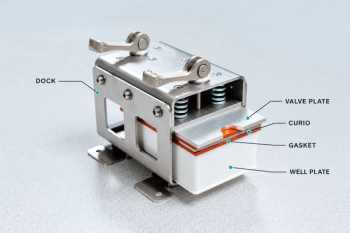
Quantera Analytical’s Terry Bates discusses parallel headspace extraction for gas chromatography-mass spectrometry (GC–MS) and direct analysis in real time–mass spectrometry (DART–MS) analysis.

Amandaa Brewer warns a shortage of large-molecule chromatography experts, as practitioners retire, could leave the next generation without the fundamentals.

Christopher Chouinard of Clemson University discusses with LCGC International how derivatization reshapes steroid mass for sharper liquid chromatography-ion mobility-mass spectrometry (LC-IM-MS) separations.
Gas chromatography (GC) tests show spoilage yeasts alter flavor and raise alcohol in NoLo beer.
Advertisement
Advertisement
Trending on LCGC International
1
Peaks & Pioneers: Amandaa Brewer on Chromatography’s Coming Expertise Gap
2
LC–MS/MS Tracks Glyphosate in Coffee Beans
3
Derivatization Enhances LC-IM-MS of 11-Oxosteroids
4
GC Reveals How Yeasts Spoil Non-alcoholic Beer
5