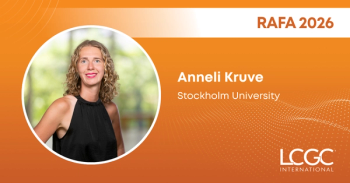
Anneli Kruve reports that toxicity predictions from MS2-derived molecular fingerprints outperform spectral-similarity methods in nontarget screening of food.
Summary: A preview of 2026 separation science trends, from PFAS and SFC to metabolomics, next-generation HPLC columns, oligonucleotides, and ADC analysis.
LCGC International's editorial mission is to give our audience practical, in-depth information that helps them perform more effectively in the laboratory, while keeping them abreast of the latest cutting-edge developments in separation science. Conference coverage plays a pivotal role in that mission, connecting our readers with the key opinion leaders shaping the field.
As associate editorial director of LCGC International, I've spent the first half of 2026 working with the LCGC content team to cover major conferences—including Pittcon, ASMS, Analytica, and HTC-19—to find out what these experts are talking about on the show floor. This short preview reel offers a snapshot of the topics on their minds this year, from antibody-drug conjugate characterization to sustainable supercritical fluid chromatography (SFC), per- and polyfluoroalkyl substances (PFAS) forensics, and oligonucleotide analysis.
What comes through across these conversations is a field in the middle of a genuine shift. Computational tools are no longer a side note to the bench work—they're becoming central to how researchers approach peptide behavior, metabolomic profiling, and method development more broadly. At the same time, longstanding technique questions haven't gone away: how to get more from high performance liquid chromatography (HPLC) column design, how to make hyphenated methods more robust across increasingly complex sample types, and how to analyze molecules like oligonucleotides that don't behave the way traditional small-molecule workflows expect.
There's also a throughline of practicality. Several researchers touch on the tension between speed and rigor—whether cutting back on sample cleanup can still produce results labs can stand behind, and how sustainability considerations are starting to shape method choices in techniques like SFC. Environmental and food-safety applications feature prominently too, with PFAS forensics and modern food analysis both getting dedicated attention as areas where separation science is being asked to do more, faster, and with greater confidence in the data it produces.