Release of Plastic Additives and Microplastic Particles from Different Consumer Products into Water under Accelerated UV Weathering Conditions – by Dr. Lars Hildebrandt, Hereon
Photodegradation of plastic products is known to accelerate weathering and the resulting release of chemical additives and particles to the environment, however these processes are complex. Here, eight different plastic consumer products were leached in double-distilled water under exposure to strong ultraviolet (UV) light for ten days, and the chemical composition of the leachates was compared to their respective dark controls. The leachates and plastic particles were investigated with a wide battery of chemical-analytical tools to broadly characterize the underlying processes and possible hazards. These covered (a) metal(loid) analysis, (b) microplastic analysis, (c) analysis of >70 organic target analytes and (d) nontargeted screening of the extracts.
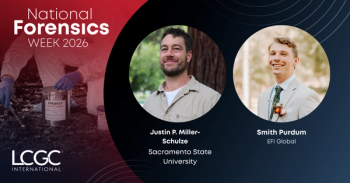
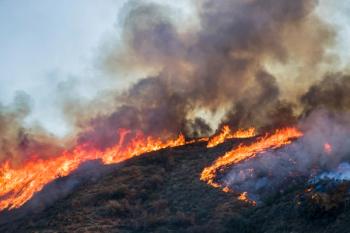
Justin Miller-Schulze and Smith Purdum explain how machine learning and chemometrics can improve fire debris classification in forensic science applications.
This week, the Chromatography Online website observed National Forensic Science Week with expert interviews on how chromatography helps solve cases, plus career stories from women in analytical science and new research on detecting rat poison in cats and tracking mold toxins in gluten-free pasta.
Kinjal Bhatt argues inclusion advocacy shouldn't fall on women alone, while Ina Varfaj credits sharing the load and learning to say no for avoiding burnout.
Steven Ray Wilson defines organ-on-a-chip as organoids on microfluidic devices, tracing their small, complex samples to the case for automated online LC–MS.