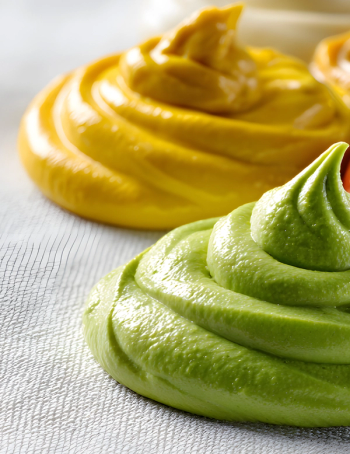
Gas chromatography–mass spectrometry (GC–MS) and ion chromatography profile wasabi and mustard heat and acidity.
LECO?s patented ChromaTOF software provides a one-stop software package for a fully automated instrument solution from sample introduction, data acquisition, True Signal Deconvolution (TSD) to analyte quantification and report generation.
From the beginning, LECO’s ChromaTOF® software was developed to provide operators with a comprehensive software tool for a fully automated instrument along with a comprehensive data processing solution. Through continuous development, new features of ChromaTOF® include Statistical Compare, Personalised Operator Workspaces, Peak Labelling and Adaptive Peak Integration for GCxGC data, Scripting and much more.
LECO’s Statistical Compare feature allows users to perform statistical comparisons from groups of different data samples. Samples are divided into subsets or classes, aligned, then statistical information on various peak properties are presented in the Compound table. The software also calculates a measure of variance and Fisher Ratios can be viewed for every analyte. A Fisher ratio is a statistical calculation that can be used to discover the unknown chemical differences among classes of complex samples.
The LECO/Fiehn Metabolomics Library, when combined with the new Statistical Compare feature in ChromaTOF® becomes the perfect tool for metabolite identification. Over 1,100 spectra of 700 unique metabolites are contained in the library, along with retention indices based on a series of fatty acid methyl esters. The library is fully integrated and works seamlessly without importing or exporting data. Developed through a unique partnership with Dr. Oliver Fiehn, this extensive and expandable library was created using a LECO Pegasus® GC–TOFMS at Dr. Fiehn's own laboratory at the University of California-Davis.
To learn more about LECO’s Separation Science products