Ultrapure water is highly prone to contamination, e.g. it easily leaches contaminants out of container surfaces and absorbs contamination from the laboratory environment. As ultrapure water is the most frequently used solvent in any LC-MS laboratory, its purity plays a critical role in analyses. There are a number of high purity water handling pitfalls that result in degradation of its quality. To help analysts critically evaluate the potential risks involved in poor ultrapure water handling, we discuss here (I) the effect of laboratory environment and long high purity water storage, (II) the effect of the container material used to collect ultrapure water, (III) the effect of laboratory ware and equipment cleaning, and (IV) the effect of poor practices of water purification system usage.
A method coupling gas chromatography-tandem mass spectrometry (GC-MS/MS) and multiple reaction monitoring (MRM) tracks lipid markers of decomposition in commingled remains.
This week's top stories on the Chromatography Online website spotlight LCGC International's new SFC-focused interview series charting the technique's rise alongside LC and GC, complemented by a practical GC data-reporting refresher and a study using chromatography to detect trace pesticides in tap water.
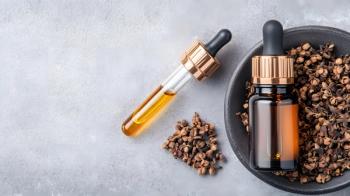
Headspace gas chromatography-ion mobility spectrometry (HS-GC-IMS) and gas chromatography-olfactometry-mass spectrometry (GC-O-MS) reveal aroma compounds in two Sichuan pepper oils.