|Articles|January 7, 2009
E-Separation Solutions
- E-Separation Solutions-01-06-2009
- Volume 0
- Issue 0
The Unique Selectivity Of pi-Interactions for Solid-Phase Extraction
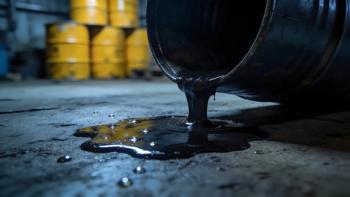
Hypercrosslinked polystyrene-type (solid-phase extraction) SPE materials exhibit a unique ability to enter pi-interactions with aromatic, heterocyclic and unsaturated compounds. This property permits selective extraction and pre-concentration of the above classes of species from non-polar media and fatty matrices. The principle has been exploited for developing analytical protocols to determine polar furan derivatives in mineral transformer oil, polyaromatic hydrocarbons (PAHs) in smoked fish and for the fractionation of polychlorinated aromatic compounds in environmental matrices.
Advertisement
Articles in this issue
over 17 years ago
Market Profile: Flash Chromatographyover 17 years ago
Technology Forum: Sample Prepover 17 years ago
Investigation of Branched Polydienes with GPC/MALSover 17 years ago
More on Degassing Mobile Phase Solventsover 17 years ago
Enhanced ELSD Sensitivity of Parabens using Sub-Ambient EvaporationAdvertisement
Related to this article

Gas chromatography-mass spectrometry (GC-MS) coupled with headspace solid-phase microextraction )HS-SPME) links cocoa variety to chocolate aroma and flavor profiles.

Liquid chromatography-tandem mass spectrometry (LC-MS/MS) identifies blood metabolite patterns tied to children's diets.

Kirstine Nielsen of Aarhus University (Denmark) discusses how targeted metabolomics ratios helped build a robust bloodstain time-since-deposition tool.

This new liquid chromatography-tandem mass spectrometry- quadrupole ion trap (LC-MS/MS-QTRAP) method identifies rat poisons in cat forensic cases.

Gérard Hopfgartner explains how atmospheric pressure photoionization can generate radical cations in LC–MS, unlocking EI-style spectra and NIST's spectral library.

Isabelle Kohler traces her unplanned path from pharmacy to bioanalysis, and why the same career struggles cut across gender lines in her PhD coaching.

LCGC International spoke to Akina Nara of Japan’s Tohoku Medical and Pharmaceutical University about a new study which links a blood compound to how long a body has been dead.
Advertisement
Advertisement