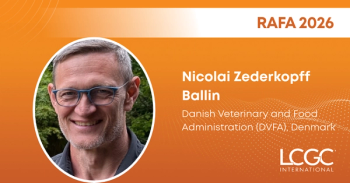
Nicolai Zederkopff explores chromatography’s role to help implement the maximum tolerable level (MTL) framework for food adulteration to translate analytical results into compliance decisions.
Analytical science's real unwritten rule is that you don't need to feel ready, and good results simply take patience.
“I think the more transparent we are about careers, that's actually where the development happens, and that's better.”
— Kinjal Bhatt, Senior Scientist, Johnson & Johnson Innovative Medicine
“Good results take time. So be patient.”
— Ina Varfaj, Postdoctoral Researcher, University of Perugia
Every field carries assumptions nobody writes down, and Kinjal Bhatt and Ina Varfaj both landed on the same target when asked which ones shape analytical science: the pressure to feel fully prepared before moving forward. Bhatt says the unwritten rule she'd challenge is the idea that you need everything figured out before stepping into a new area. Early in her career she thought otherwise, but has since learned that growth happens by saying yes to a new analytical challenge, field, or project before feeling ready for it, and that asking questions is often mistaken for uncertainty when it's really the opposite—some of the strongest scientists and leaders she's worked with are the ones most comfortable saying "I don't know, let's find out." She'd rather see early-career scientists know that nobody has everything figured out, and that confidence tends to follow the growth rather than precede it. Varfaj's version of the same idea comes from the bench: science is built on not knowing things, and patience is part of the method. She points to a very literal lab lesson—the sample you're tempted to discard is always the one you need the next day—and argues that time spent without results is often just time spent not yet looking at the problem from the right angle. Both frame patience and self-doubt not as obstacles to push through quietly, but as a normal, even necessary, part of performing good science. Bhatt extends the point to comparison among peers: PhD colleagues often see others land cleaner data on a shorter timeline, but she says she has consistently learned more from experiments that failed than from the ones that went the way she wanted.
To view more Women in Chromatography discussions, please click
24 days ago
Revisiting Column Insertion Distance24 days ago
A Preview of SFC Europe 2026