Application Notes: Pharmaceuticals

i1_t-739821-1408616972573.gif

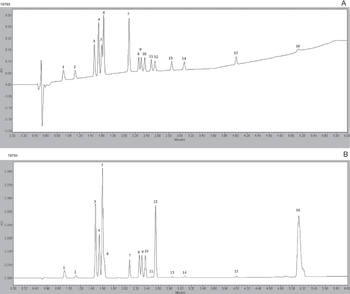
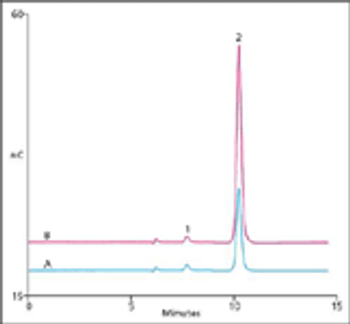
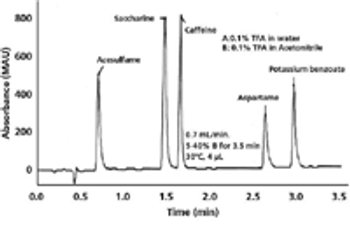
The popularity of diet soft drinks containing aspartame requires the analysis of thousands of samples for quality control purposes each year. These analyses are typically carried out with some fraction of organic modifier in the eluent, leading to the generation of thousands of gallons of hazardous organic waste. This note shows the "green" analysis of several commercial diet soft drinks in combination with a 100% water mobile phase.

i1_t-739809-1408616996950.gif

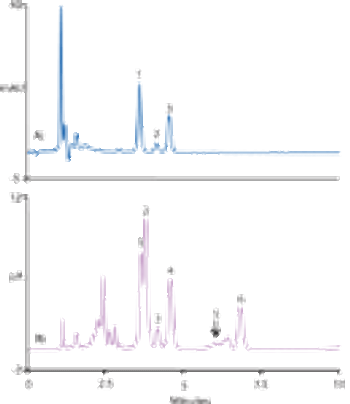
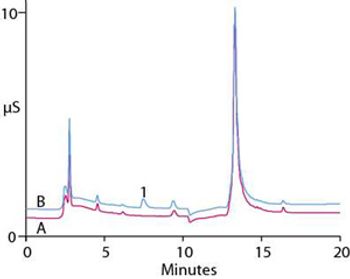
In December 2008, the United States FDA recognized rebaudioside A (reb. A) purified from Stevia rebaudiana (Bertoni) as Generally Recognized as Safe (GRAS) as a sugar substitute in foods. As a result, stevia products have become popular tabletop and beverage sweeteners. Two steviol glycosides, stevioside and reb. A, are largely responsible for the desired sweet flavor, with reb. A preferred for sweeteners (1).

i2-713148-1408622236776.gif

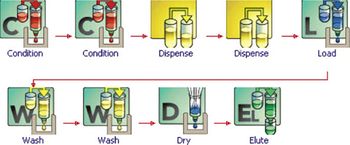
AGPC column and organic solvents are used to selectively pass large macro molecules such as lipids, resins, waxes, and other compounds from sample extracts while retaining the smaller target analyte molecules in the pores of the gel.

i1_t-713152-1408622230047.gif

Aminopolycarboxylate chelating agents form stable complexes with transition metals, thereby increasing metal solubility, preventing metal-catalyzed reactions, and removing heavy metal contamination in soil remediation.

i2-713161-1408622200070.gif

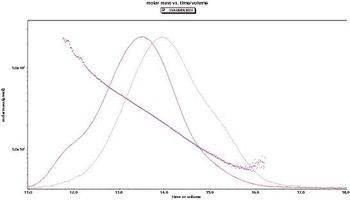
Self-Aggregation of Gelatin

Gelatin is the denatured form of collagen, the main component of skin, bone, and connective tissues of animals.