


Sponsored Content
Synthetically derived food and beverage dye analysis to meet regulatory requirements aimed at reducing the risk of allergies, cancers, and attention deficits.
Sponsored Content
Synthetically derived food and beverage dye analysis to meet regulatory requirements aimed at reducing the risk of allergies, cancers, and attention deficits.
Analyzing crops for beneficial and harmful compounds is an indispensable tool for assessing the viability of various agricultural crops for consumption.
Sponsored Content
The metabolites from an infection of the fungus, Aspergillus flavus in foods are known to be toxic to human life, infected food needs to be identified.
Sponsored Content - NA
Essential oils have been a staple of the food, fragrance, and health markets for many years. Owing to their unique composition, essential oils can be used for a variety of applications.
Sponsored Content
Common isoflavones and mycotoxins associated with Estrogen Receptor binding are separated into their individual components using reversed-phase liquid chromatography.
Sponsored Content
Essential oils have been a staple of the food, fragrance, and health markets for many years. Owing to their unique composition, essential oils can be used for a variety of applications.
Sponsored Content - NA
Essential oils have been a staple of the food, fragrance, and health markets for many years. Owing to their unique composition, essential oils can be used for a variety of applications

LCGC North America

Organic arsenic compounds added to feed stocks of chicken and poultry pose serious environmental and ecological threats. National and worldwide health organizations, such as the U.S. Environmental Protection Agency and the U.S. Food and Drug Administration, have recently implemented more stringent concentration limits for arsenic species in drinking water and foodstuffs.

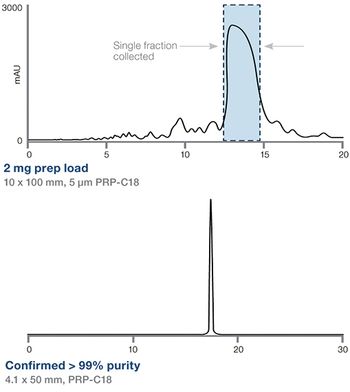
In this study, a reversed-phase HPLC method was developed for separation of five steroid hormones with partition coefficients ranging from 1.47 (cortisone) to 4.5 (pregnenolone) on a Hamilton PRP-C18 HPLC column.

The Application Notebook

The Application Notebook


The Application Notebook
Special Issues
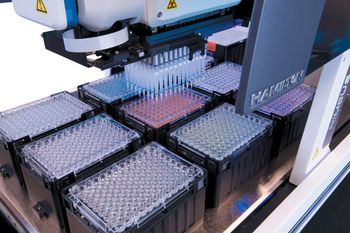
Utilizing Hamilton’s CO-RE® disposable tips with DPX technology provides a fast, accurate, and simple extraction method for analyzing drugs of abuse in urine. The Microlab NIMBUS equipped with a CO-RE 96-channel Multi-Probe Head (MPH) allows for high-throughput, automated sample processing.

The Application Notebook

The Application Notebook
Special Issues
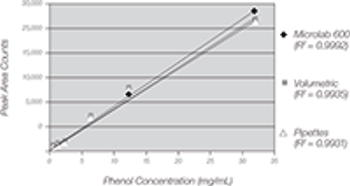
Environmental laboratories analyze customer samples to determine the concentration of contaminants in soil, drinking water, and so on. Frequently these samples are diluted prior to analysis by the ICP-MS. It is critical that these dilutions are accurate and reproducible. In this study we compared the speed, accuracy, and consumable costs for common sample preparation techniques and found that the Microlab 600 is the best option.
Sponsored Content - NA
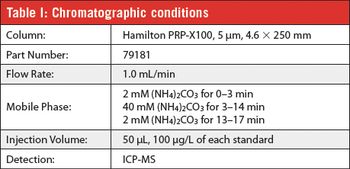
Analysis of arsenic species is made challenging due to diverse sample matrices. To circumvent these problems, an HPLC ICP-MS method has been developed. Resolution of arsenic compounds is achieved by ion exchange chromatography on a Hamilton PRP-X100 column, a 55% cross-linked polystyrene-divinylbenzene copolymer functionalized with quaternary ammonium anion-exchanger group.
The Application Notebook
LCGC North America
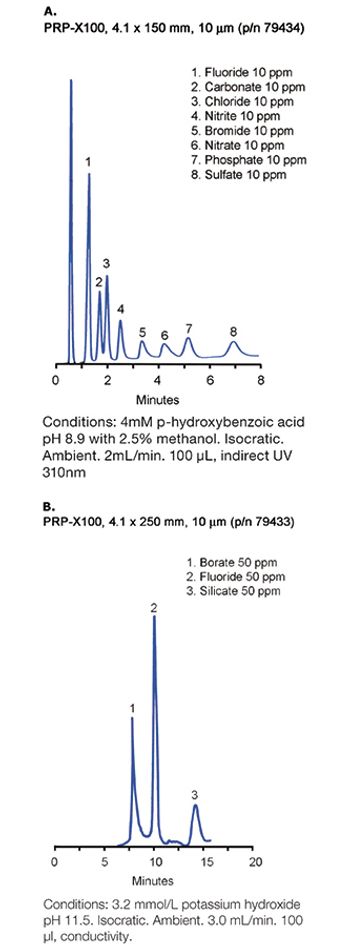
Hamilton polymeric PRP-X100 and PRP-X110 anion exchange columns are the easy way to separate inorganic and organic anions from 10 ppb to 500 ppm without elaborative preconcentration or suppression.
The Application Notebook
Hamilton PRP-X100 and PRP-X110 are the perfect solution for anion analysis in water or environmental samples. The robust design and covalent surface modification of the packing material lead to a highly increased lifetime as compared to the competition. The production process is compliant to ISO 9001 ensuring an outstanding column-to-column and lot-to-lot reproducibility.
The Application Notebook
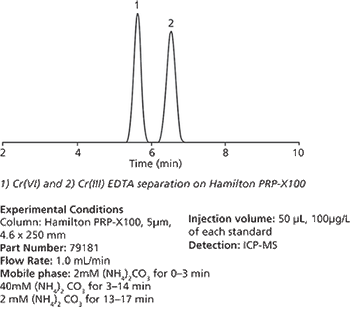
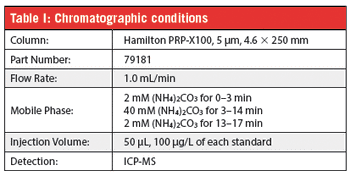
Analysis of chromium species is made challenging due to the nature of the element and diverse sample matrices
The Application Notebook
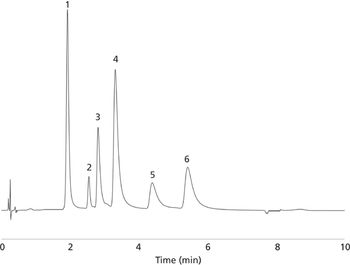
Organic arsenic compounds added to feed stocks of chicken and poultry pose serious environmental and ecological threats. National and worldwide health organizations, such as the United States Environmental Protection Agency and the US Food and Drug Administration, have recently implemented more stringent concentration limits for arsenic species in drinking water and foodstuffs.
The Application Notebook
Mobile phase pH is a powerful tool in methods development, particularly for separation of neutral forms of amines or other organic bases under alkaline conditions.