


LCGC Europe
Getting started on the right foot is important for efficient method development.

John Dolan has been writing "LC Troubleshooting" for LCGC for over 25 years. One of the industry's most respected professionals, John is currently a principal instructor for LC Resources, Walnut Creek, California He is also a member of LCGC's editorial advisory board.
LCGC Europe
Getting started on the right foot is important for efficient method development.
LCGC North America
How to avoid an expensive shot in the dark.


LCGC Europe
Different methods require different strategies.

LCGC North America
In the fourth installment in a series on method development for liquid chromatography (LC), with an emphasis on devloping trouble-free methods quickly. John Dolan started out by considering some of the goals we might have and some method development strategies.

LCGC North America
Faster isn't always better

LCGC Europe
Column temperature plays an important role in controlling peak spacing (selectivity) in reversed-phase liquid chromatography (LC) separations. Temperature has long been known to affect retention time, and more recently, its use in adjusting selectivity has gained popularity (see reference 1 for a review of temperature selectivity). In preparation of a paper for the most recent Pittsburgh Conference, I had an opportunity to reexamine some data that compare temperature selectivity with other variables used to control selectivity in LC separation. This month's instalment of "LC Troubleshooting" examines temperature selectivity and its relationship to pH selectivity.

LCGC North America
Getting started on the right foot is important for efficient method development.

LCGC Asia Pacific
Mass overload is related to the mass of sample that can be injected before the stationary phase is sufficiently loaded to cause changes in the chromatography.
LCGC Europe
The topic of this month's instalment of "LC Troubleshooting" was prompted by a manuscript I recently reviewed and a question I received from a reader of this column. Both inputs related to the variability of retention times observed in liquid chromatography (LC) methods. Variable retention is a topic that has been touched on many times over the history of this column, sometimes just in passing and other times in depth. Yet, it seems to be a problem that keeps recurring, so I think it is worth considering again.
LCGC North America
Different methods require different strategies.
Special Issues
I have to cede my seniority as an LCGC columnist to Ron Majors - he started several months before I did.
LCGC North America
Is it more than meets the eye?
LCGC Europe
...it is important to acknowledge that environmental concerns can be more important than the economics of the reduction of solvent consumption.
LCGC Europe
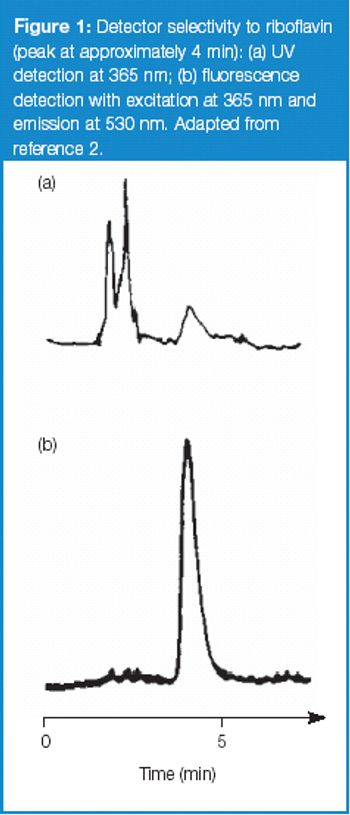
Detector selection for a method should be made on a case-by-case basis.
LCGC North America
Prompted by a recently reviewed manuscript and a question from a reader, John Dolan examines the variability of retention times observed in LC methods in this month's installment of "LC Troubleshooting."
LCGC Asia Pacific
As I write this instalment of "LC Troubleshooting", I have just completed teaching a series of liquid chromatography (LC) method development classes to pharmaceutical scientists in India. As a parting gift, my host gave me a copy of Thomas Friedman's The World is Flat?.1 One central theme of this book is that the technology and skills for the science and information technology sectors are available around the world and are no longer the exclusive domain of the US and Western Europe.
LCGC North America
it has been more than 10 years since solvent recycling has been the main subject of an "LC troubleshooting" column, so this month, John Dolan revists this subject.
LCGC Europe
A reluctance to make any changes to a validated or compendial method is common, and often well founded.
LCGC North America
John Dolan considers some techniques to improve detection limits, no matter what the application is.

LCGC Europe
Excess variability is not acceptable in a pharmaceutical method.
LCGC Europe
This month's instalment of "LC Troubleshooting" presents two examples of sample degradation inside the liquid chromatography (LC) column. Depending upon the type of samples you analyse, sample degradation might or might not be a problem that you encounter regularly. However, most of us run a sufficiently wide variety of sample types over our careers that we will probably run into some samples that do not behave as expected.
LCGC North America
Chromatographers worldwide suffer from the same problems.

LCGC Europe
Sometimes it is easy to ignore the fittings and tubing that are used to connect various parts of the liquid chromatography (LC) system. After all, it's the pump, injector, column and detector that do all the work - right? Well, yes and no. It is possible to compromise an otherwise excellent separation by the improper use of fittings, but with reasonable care, you should not have problems with most applications. This month's instalment of "LC Troubleshooting" takes a look at the important components that are used to connect various parts of the LC system and how to use them wisely.
LCGC North America
Excess variability is not acceptable in a pharmaceutical method.
LCGC North America
What do you do when the sample changes inside the column?
LCGC Europe
This month's instalment of "LC Troubleshooting" focuses on two column-related problems reported by readers. The first deals with a column that takes several injections to "settle down" for each batch of samples. The second relates to short column life as a result of early fouling of the column. Although both of these problems are not encountered with most liquid chromatography (LC) methods, they both appear often enough that we all should be aware of them. It is only a matter of time before you meet one of these problem types with one of your methods.
LCGC North America
This month's "LC Troubleshooting" takes a look at the important components that are used to connect various parts of the LC system and how to use them wisely.

LCGC Europe
Because each sample is unique, you will need to check for carryover under the conditions of each method.
LCGC North America
John Dolan addresses two column-related problems reported by readers - the first deals with a column that takes several injections to "settle down" for each batch of samples while the second problem relates to short column life due to early fouling of the column.