


LCGC Europe
Where do you start when you encounter a problem with your LC system?

John Dolan has been writing "LC Troubleshooting" for LCGC for over 25 years. One of the industry's most respected professionals, John is currently a principal instructor for LC Resources, Walnut Creek, California He is also a member of LCGC's editorial advisory board.
LCGC Europe
Where do you start when you encounter a problem with your LC system?

LCGC North America
Rules of thumb for isolating problems, determining problem sources, and developing a maintenance routine.

LCGC Europe
What do you do when a peak grows over time?

LCGC North America
A case of over-recovery of a preservative on ageing of a pharmaceutical product provides a good example of how to approach solving a problem of overlapping peaks in an LC separation.

LCGC Europe
Can pressure alone affect the appearance of a chromatogram?
LCGC North America
Can pressure alone affect the appearance of a chromatogram?

LCGC Europe
Tips on what to consider when choosing another column to try and solve a tricky separation problem.
LCGC North America
Comparisons between different C18 columns and the best way to select which one to use
LCGC North America
A few simple calculations and estimates can provide insight into a troublesome chromatogram.

LCGC Europe
Apply the fundmentals to your problem and the cause may become obvious.
LCGC Europe
A change in the mobile phase strength can be a powerful tool to move peaks in a separation.
LCGC North America
A change in the mobile phase strength can be a powerful tool to move peaks in a separation.
LCGC Europe
Examining the properties of the three most commonly used solvents and how to select the most suitable mobile phase composition.
LCGC North America
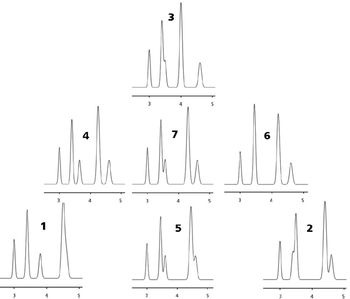
Methanol and acetonitrile are the two most popular organic solvents to use in the mobile phase for reversed-phase liquid chromatography (LC) separations. Tetrahydrofuran is also used to a lesser extent. Why are these solvents the most popular ones? Are there alternative solvents that should be tried? This month's "LC Troubleshooting" examines these and some other aspects of solvent selection for LC.

LCGC Asia Pacific
If something doesn't look right you need to investigate!
LCGC North America
John Dolan presents some practical pointers to get the most out of your UHPLC system.
LCGC Europe
An essential guide to getting the most from your UHPLC system.
LCGC North America
John Dolan discusses an inquiry he received from a reader complaining about the difficulty he was having meeting system suitability for an LC method that had been transferred into his lab.
LCGC Europe
If something doesn't look right you need to investigate!
LCGC Europe
How to make gradient separations faster without changing the separation
LCGC North America
Guest author Stefan Brand and John Dolan take a look at how to speed up gradient separations while avoiding common errors.

LCGC Asia Pacific
A broad peak where it does not belong is a classic sign of late elution.
LCGC North America
Deterioration of the separation can result from many causes. This month's column looks at some techniques to isolate the problem source.
LCGC North America
John Dolan looks at a case in which the peak doesn't seem to belong with the neighboring peaks in the chromatogram.
LCGC Europe
A broad peak where it doesn't belong is a classic sign of late elution.

LCGC Asia Pacific
We focus on the characterization of reversed-phase columns with particular emphasis on the hydrophobic-subtraction model

LCGC North America
The coauthors discuss the various attributes of and approaches to reversed-phase chromatography.
LCGC Europe
We focus on the characterization of reversed-phase columns with particular emphasis on the hydrophobic-subtraction model
LCGC Europe
This is John Dolan's 300th "LC Troubleshooting" column. Here, he takes a look through the archives.
LCGC North America
John Dolan reaches a milestone with his 300th installment of "LC Troubleshooting" and takes a look back through the years.